Gardens with alliums bring a unique flair to any outdoor space, showcasing stunning globe-shaped blooms that brighten up the landscape. These hardy perennials are perfect for adding color and texture, standing tall alongside other plants or as eye-catching focal points. With a variety of sizes and colors, alliums are not only easy to grow but also attract pollinators, making them a garden favorite.
Alliums in Container Gardening
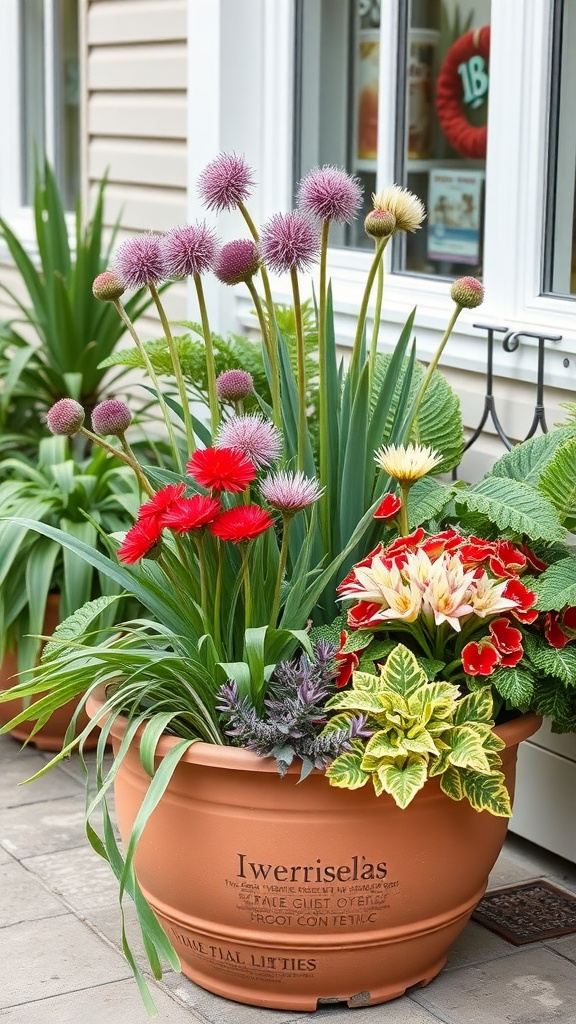
Container gardening is a fantastic way to showcase alliums. These unique flowers bring a pop of color and texture to any space. In the image, you can see a lovely arrangement of alliums alongside vibrant red and yellow blooms. The mix creates a cheerful display that can brighten up patios or balconies.
Alliums are known for their round, globe-like flower heads. They stand tall and can add height to your container garden. Pairing them with other plants, like the lush greens and colorful flowers in the pot, creates a balanced look. This combination not only looks great but also attracts pollinators.
When planting alliums in containers, choose a pot that allows for good drainage. Use a quality potting mix to help them thrive. Position your container in a spot that gets plenty of sunlight. With the right care, your alliums will flourish and become a stunning focal point in your garden.
Creating a Colorful Allium Border
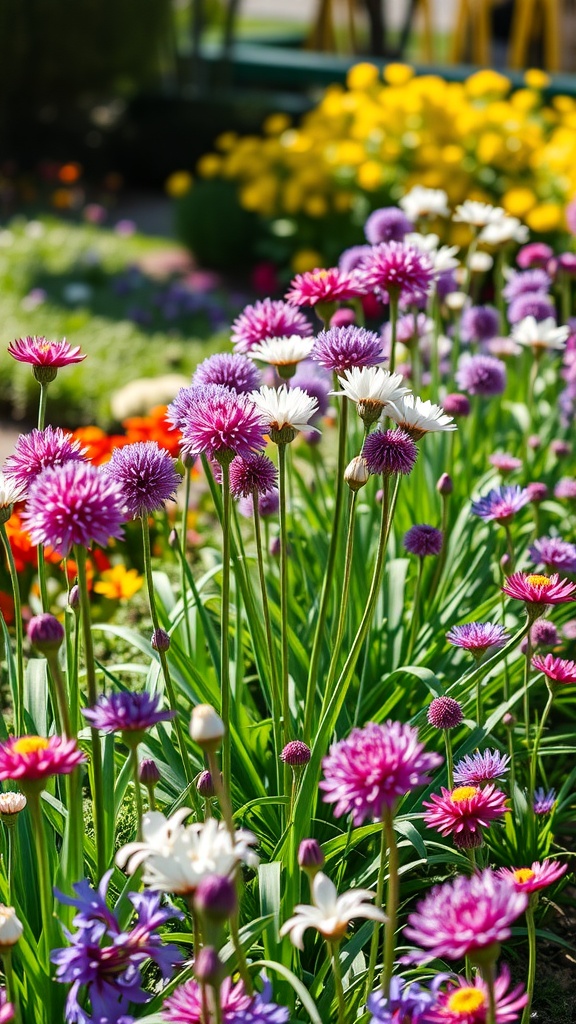
Alliums are a fantastic choice for adding color and texture to your garden. Their unique spherical blooms can create a stunning visual effect. In the image, you can see a vibrant mix of alliums in shades of purple and pink, standing tall among other flowers.
When planning your allium border, think about layering. Taller alliums can be placed at the back, while shorter varieties can fill in the front. This creates depth and interest. The lush green leaves provide a nice contrast to the colorful blooms, making the whole arrangement pop.
Mixing alliums with other flowers, like daisies or lilies, can enhance the overall look. The combination of different shapes and colors will keep your garden lively throughout the growing season. Remember to choose a sunny spot for your alliums, as they thrive in bright light.
Allium Varieties for Every Garden
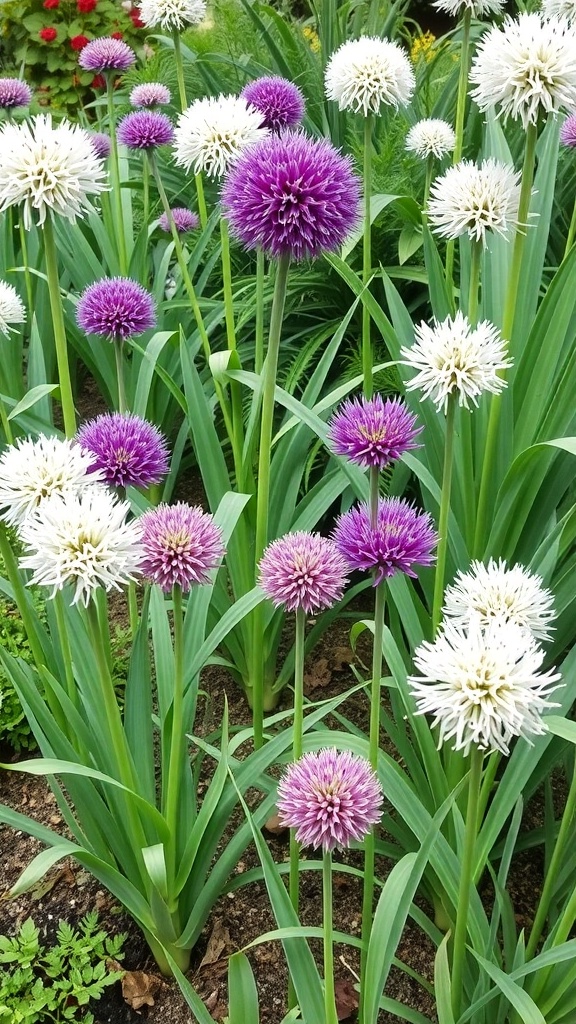
Alliums are a fantastic choice for any garden. Their unique shapes and vibrant colors can really make a space pop. In the image, you can see a lovely mix of purple and white alliums, standing tall with their round, fluffy blooms. These flowers not only look stunning, but they also attract pollinators, making them a great addition to any garden.
There are many varieties of alliums to choose from. For instance, Allium giganteum, known for its large globe-like flowers, can reach impressive heights. On the other hand, Allium moly offers a more compact option with bright yellow blooms. Each type brings its own charm, allowing you to create a garden that reflects your personal style.
When planting alliums, consider their spacing. They thrive when given enough room to grow. Mixing different varieties can create a beautiful layered effect in your garden. Whether you prefer a monochromatic look or a colorful display, alliums can fit right in.
Designing a Modern Allium Garden
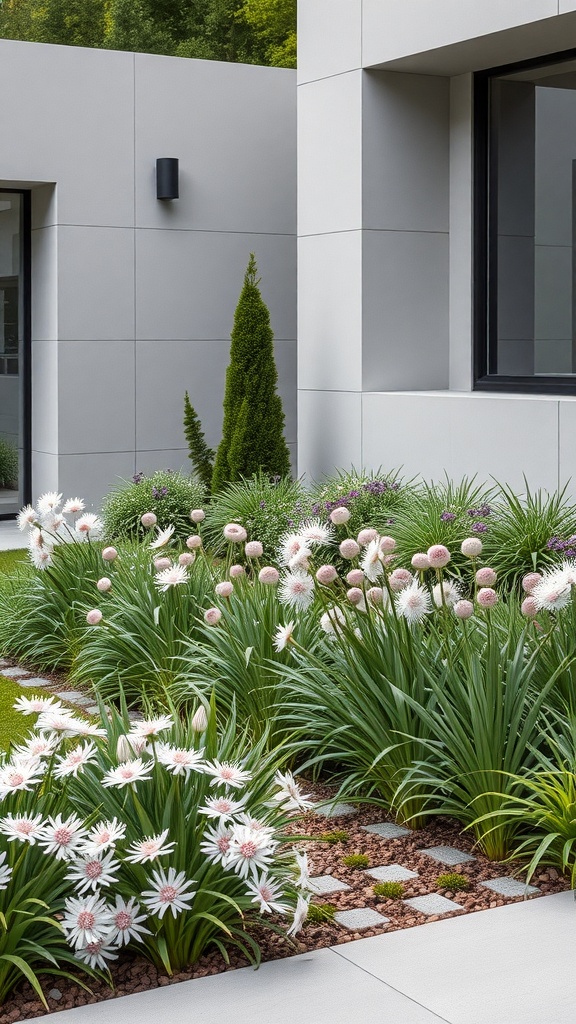
Creating a modern allium garden can be a fun and rewarding project. The image showcases a beautiful arrangement of alliums, which add a unique touch to any landscape. Their round flower heads and tall stems create a striking visual contrast against sleek, contemporary architecture.
In this design, the alliums are paired with lush green foliage, enhancing their vibrant colors. The clean lines of the surrounding hardscape complement the organic shapes of the flowers. This balance between nature and modern design is key to a successful garden.
When planning your allium garden, think about spacing and placement. Grouping different varieties can create layers of height and color. Consider adding some low-growing plants to fill in gaps and provide a lush backdrop for the taller alliums. This layering will not only look appealing but also attract various pollinators.
Don’t forget to incorporate pathways or stepping stones, as seen in the image. These elements guide visitors through the garden and make it accessible. The use of natural materials, like stone and gravel, can enhance the overall aesthetic while keeping maintenance low.
Mixing Alliums with Perennials
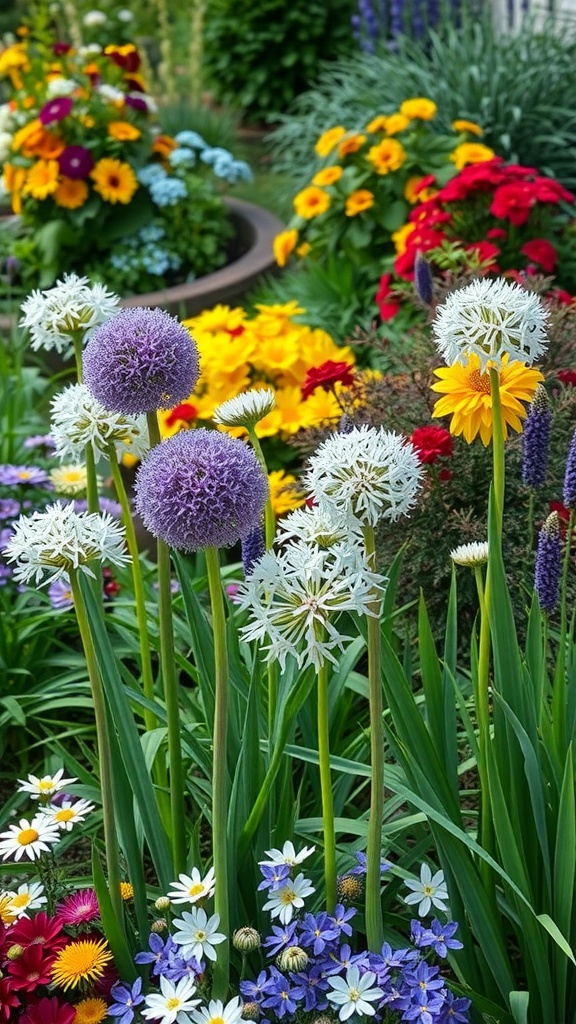
Alliums are a fantastic choice for adding height and interest to your garden. Their unique globe-shaped flowers stand tall among a variety of perennials, creating a stunning visual display. In the image, you can see vibrant alliums mixed with colorful blooms like daisies and gerbera daisies, which complement their striking form.
When mixing alliums with perennials, think about color and texture. The purple and white alliums contrast beautifully with the reds, yellows, and blues of the surrounding flowers. This combination not only draws the eye but also enhances the overall garden design.
Consider planting alliums alongside lower-growing perennials like creeping phlox or daylilies. This layering effect adds depth to your garden bed. The tall alliums provide a lovely backdrop, while the shorter plants fill in the space below, creating a balanced look.
Don’t forget about the blooming times! Alliums typically flower in late spring to early summer, so pairing them with perennials that bloom at different times can keep your garden lively throughout the seasons. Mixing these plants can lead to a garden that feels dynamic and full of life.
Seasonal Care for Alliums
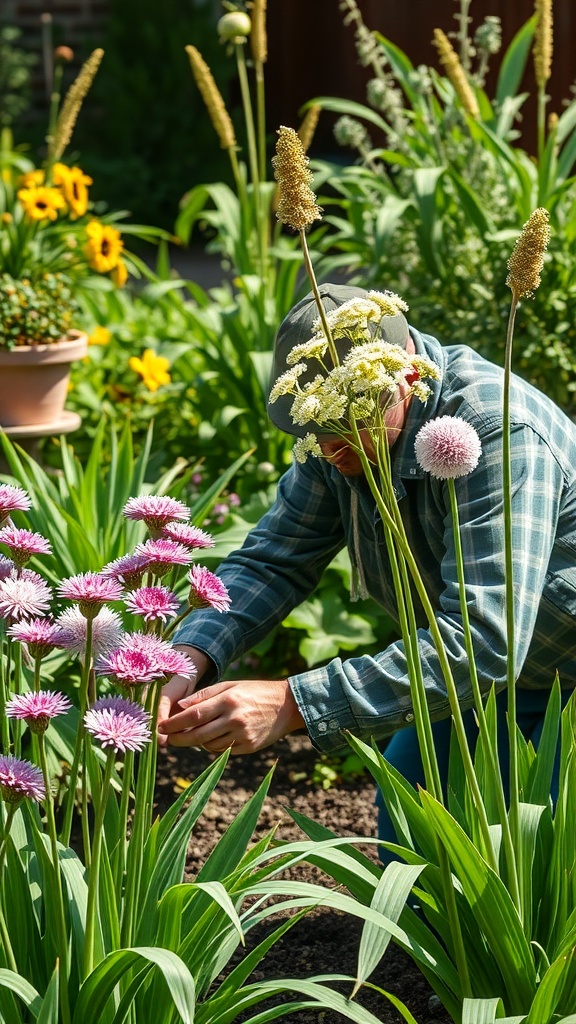
Alliums are a delightful addition to any garden, and they thrive with the right seasonal care. In the image, we see a gardener tending to vibrant alliums, showcasing their beauty and the joy of gardening. These flowers can add a pop of color and texture to your outdoor space.
During spring, it’s important to check for any weeds around the alliums. Weeding helps them get the nutrients they need. Regular watering is also essential, especially in dry spells. Aim for deep watering to encourage strong root growth.
As summer approaches, deadheading spent flowers can keep your garden looking tidy. This process encourages more blooms and prevents the plants from going to seed too early. Make sure to monitor for pests, as they can sometimes be attracted to alliums.
In the fall, after the blooms have faded, it’s time to prepare for winter. Cut back the foliage once it turns yellow. This helps the plant conserve energy for the next growing season. Mulching can also protect the bulbs from harsh winter conditions.
With a little care throughout the seasons, your alliums will flourish and bring beauty to your garden year after year.
Combining Alliums with Ornamental Grasses
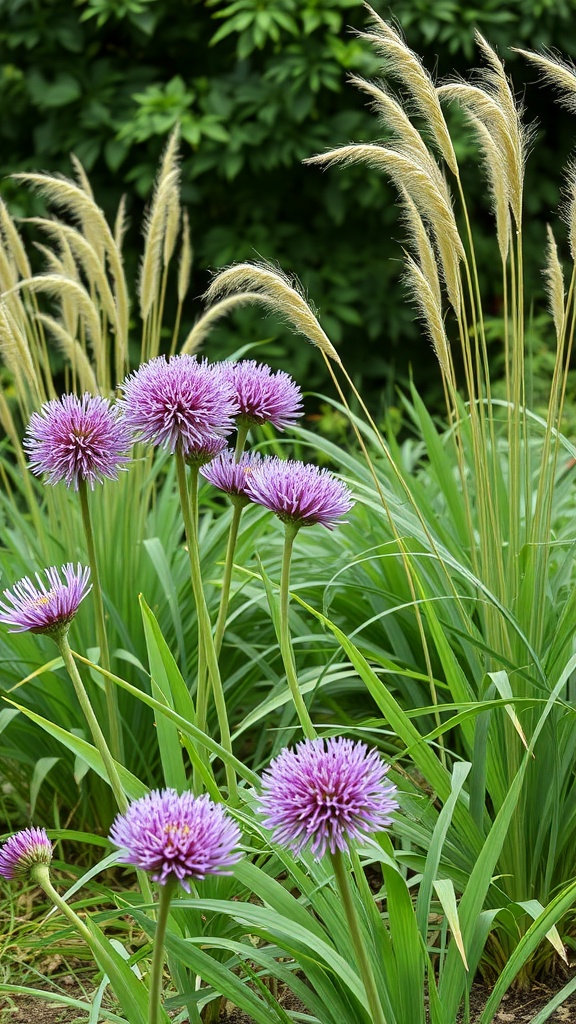
Alliums are striking flowers that can bring a pop of color to any garden. Their round, purple blooms stand tall and proud, making them a favorite among gardeners. When paired with ornamental grasses, they create a beautiful contrast. The soft, flowing texture of the grasses complements the boldness of the alliums perfectly.
In the image, you can see clusters of alliums surrounded by graceful grasses. This combination not only looks great but also adds depth to the garden. The alliums draw the eye with their vibrant color, while the grasses provide a gentle backdrop. This mix can make your garden feel more dynamic and alive.
Ornamental grasses are low-maintenance and can thrive in various conditions. They sway gently in the breeze, adding movement to your garden. When you plant alliums alongside these grasses, you create a lively scene that changes with the seasons. This pairing is a great way to keep your garden interesting throughout the year.
Consider using different heights and varieties of grasses to enhance the look even more. Tall grasses can frame the alliums, while shorter ones can fill in gaps. This layering effect creates a natural, flowing design that feels effortless. So, if you’re looking to spruce up your garden, think about mixing alliums with ornamental grasses for a stunning display!
Attracting Pollinators with Alliums
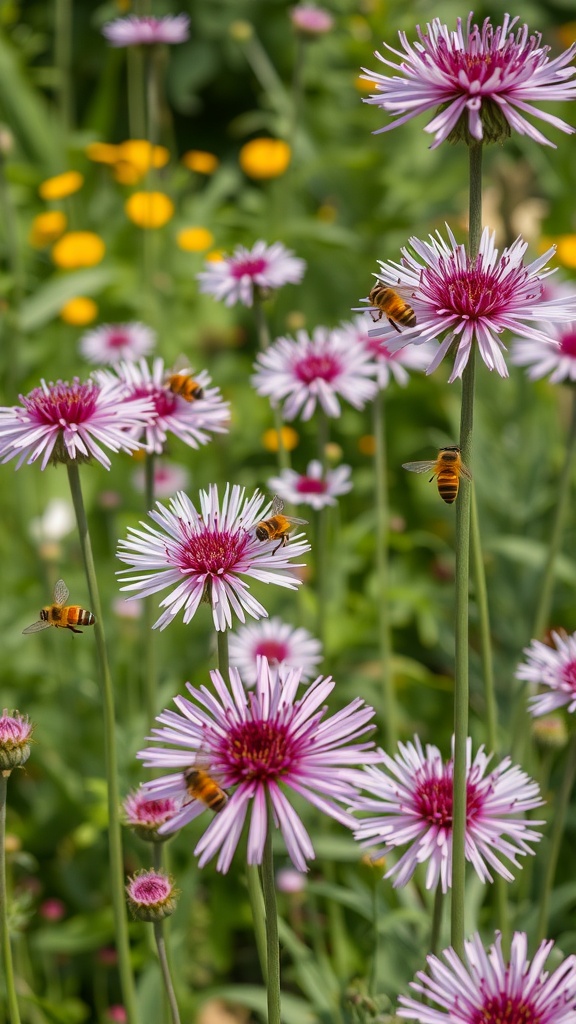
Alliums are not just beautiful; they also play a key role in attracting pollinators. The vibrant flowers, often seen in shades of purple and pink, create a stunning display in any garden. In the image, you can spot bees buzzing around the alliums, happily collecting nectar. This interaction is vital for both the plants and the bees.
Pollinators like bees are essential for the health of our ecosystems. They help in the reproduction of many plants, including alliums. When you plant these flowers, you invite these helpful creatures into your garden. The sight of bees working diligently among the blooms is a reminder of nature’s balance.
To enhance your garden’s appeal to pollinators, consider planting alliums alongside other flowering plants. This variety can provide a continuous source of food throughout the growing season. The combination of colors and scents will create a lively atmosphere, making your garden a favorite spot for bees and other pollinators.
Alliums and Edible Landscaping
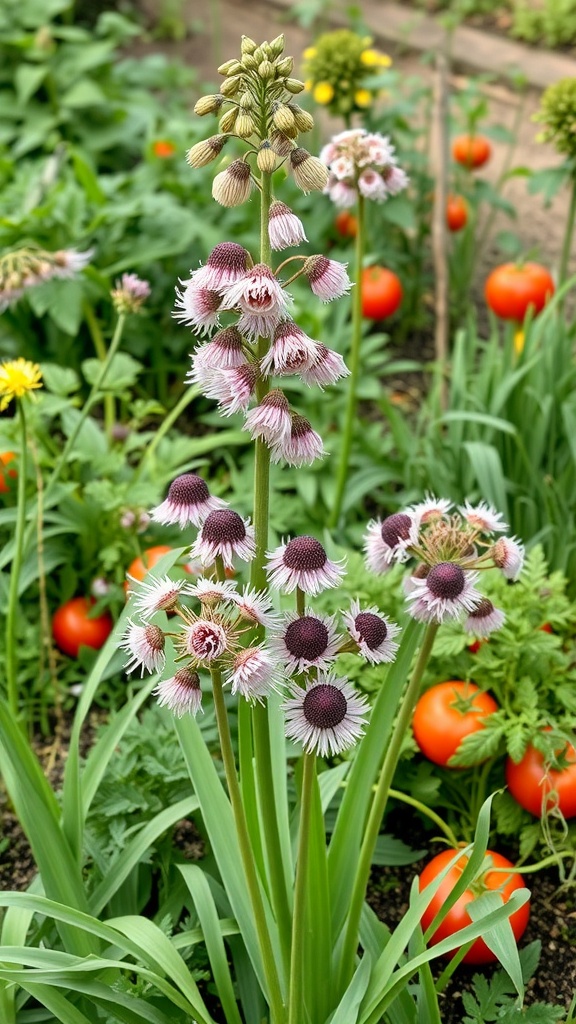
Alliums are not just beautiful; they can also play a role in edible landscaping. The image shows stunning alliums blooming alongside vibrant tomatoes. This combination creates a visually appealing garden that is both functional and attractive.
These flowers add a pop of color and texture to your garden. They can help attract beneficial insects, which is great for your veggies. Plus, alliums have a mild onion flavor that can enhance various dishes.
When planning your garden, think about mixing these flowers with your favorite edible plants. Not only do they look good, but they also contribute to a healthy ecosystem. So, why not give it a try? Your garden will thank you!
Alliums in Urban Gardens
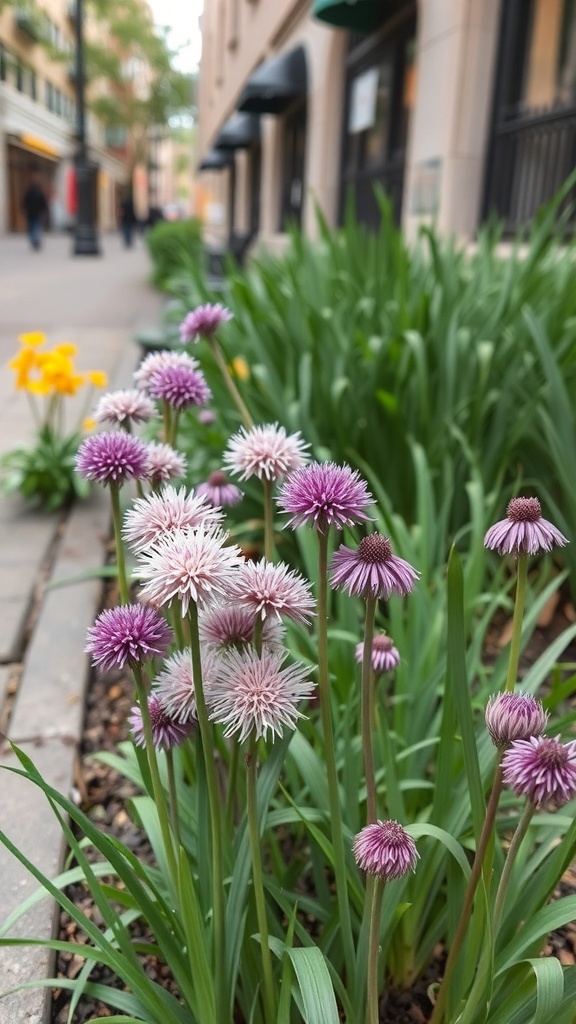
Urban gardens can be a delightful surprise, especially when they feature alliums. These unique flowers bring a pop of color and a touch of whimsy to city landscapes. In the image, you can see a cluster of alliums with their striking purple hues, standing tall among lush green foliage.
Alliums are perfect for urban settings. They thrive in smaller spaces and require minimal maintenance. Their round blooms add a playful element to any garden bed or sidewalk planter. In the background, you can spot some cheerful yellow flowers, creating a beautiful contrast with the alliums.
These flowers not only look great but also attract pollinators, making them a fantastic choice for eco-friendly gardening. Whether in a community garden or a private balcony, alliums can transform ordinary urban spaces into vibrant green havens.
Allium Color Combinations
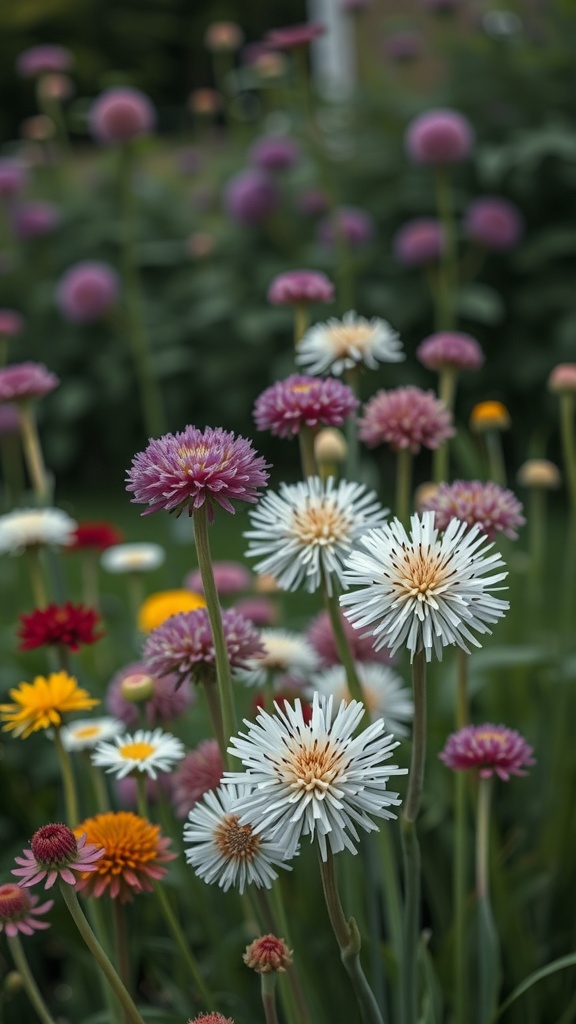
Alliums bring a unique charm to gardens with their striking shapes and colors. In the image, you can see a delightful mix of allium flowers, showcasing shades of purple, white, and vibrant yellows. This colorful combination creates a lively atmosphere, perfect for any garden setting.
The round purple blooms stand tall, adding height and drama, while the white flowers offer a fresh contrast. The pops of yellow and red from nearby flowers enhance the overall visual appeal. Mixing these colors can create a stunning display that attracts attention and invites admiration.
When planning your garden, think about how different allium colors can complement each other. Pairing deep purples with bright whites can create a striking look, while adding warm colors like yellow can bring warmth and joy to the scene. Experimenting with these combinations can lead to a vibrant and inviting garden.
Using Alliums as Focal Points
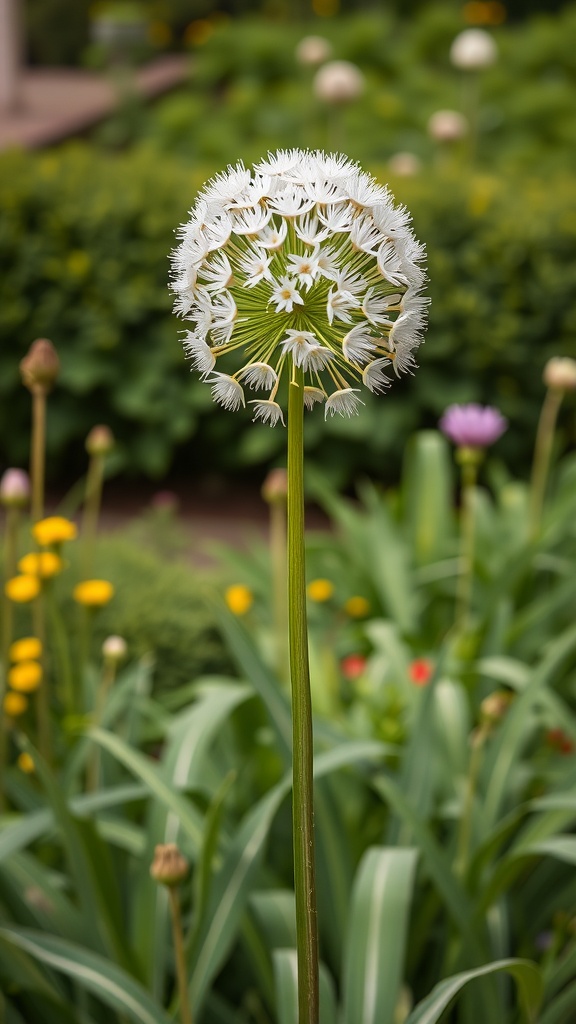
Alliums are striking flowers that can really make a garden pop. In the image, we see a beautiful allium standing tall, showcasing its unique round shape and delicate white blooms. This flower draws the eye and adds a touch of elegance to any garden space.
Using alliums as focal points is a fantastic idea. Their height and distinct form create visual interest. You can plant them among shorter flowers or in clusters to highlight their beauty. This not only enhances the overall look but also brings a sense of balance to the garden.
Consider mixing alliums with other colorful blooms. This contrast can make your garden feel lively and vibrant. They also attract pollinators, which is a bonus for any garden enthusiast. So, whether you’re designing a new garden or refreshing an existing one, alliums can be a perfect choice for creating stunning focal points.
Alliums for Naturalistic Planting
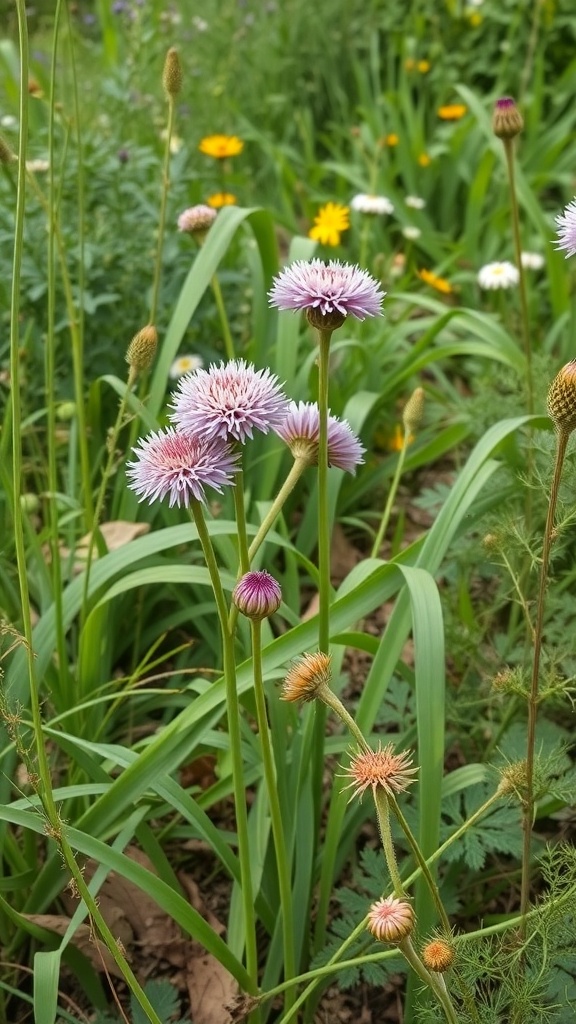
Alliums bring a unique charm to gardens, especially in naturalistic settings. Their tall, slender stems and round clusters of flowers create a delightful visual contrast against lush green foliage. In the image, you can see a variety of alliums standing proudly among other wildflowers, showcasing their ability to blend seamlessly into a more relaxed garden style.
These flowers are not only beautiful but also attract pollinators like bees and butterflies. This makes them a great choice for those looking to support local wildlife. The mix of colors and shapes in the garden adds to its overall appeal, making it a vibrant space for both people and creatures alike.
Planting alliums in groups can enhance their impact. They work well with other perennials and grasses, creating a natural look that feels effortless. Consider pairing them with lower-growing plants to highlight their height and structure. This approach allows for a dynamic garden that changes with the seasons, providing interest throughout the year.
The History of Alliums in Gardens
Alliums have a rich history in gardens, dating back thousands of years. These striking plants, known for their unique globe-shaped flowers, have been cherished for their beauty and versatility.
In ancient times, alliums were often grown not just for their ornamental value, but also for their culinary uses. Cultures around the world have utilized garlic, onions, and leeks, all members of the allium family, in their kitchens.
As gardens evolved, so did the use of alliums. They became popular in formal gardens during the Renaissance, admired for their architectural shapes and vibrant colors. Today, they are a favorite among gardeners looking to add a touch of drama to their landscapes.
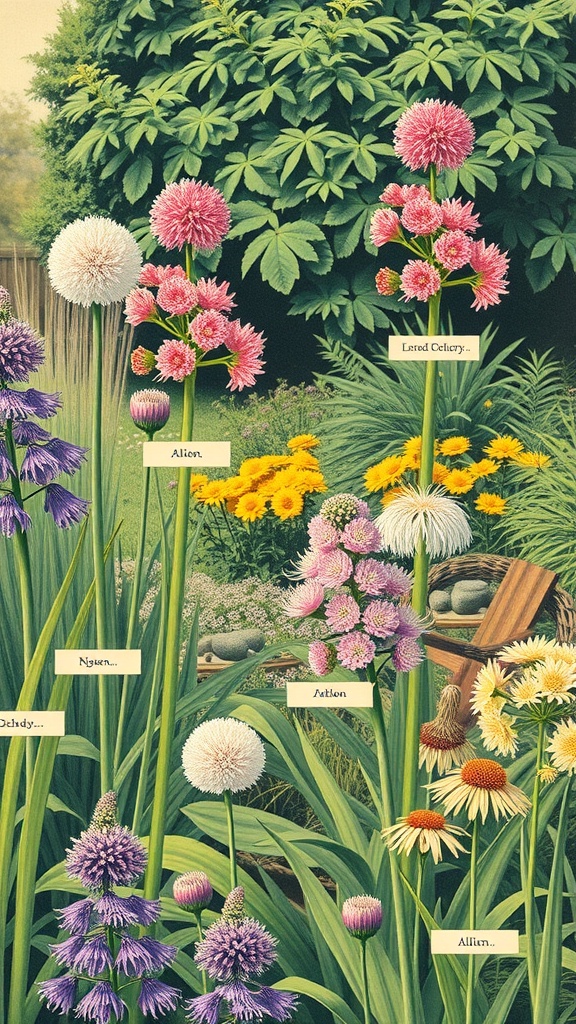
The image showcases a variety of alliums, each with its own charm. From the tall, spiky blooms to the round, fluffy heads, they create a stunning visual impact. This diversity makes them perfect for mixed borders or as focal points in garden designs.
Alliums are not just pretty faces; they attract pollinators and can help deter pests. This makes them a practical choice for any garden. Their long-standing presence in horticulture speaks to their enduring appeal and adaptability.
Alliums in Cottage Gardens
Cottage gardens are known for their charming, informal style. They often feature a mix of flowers, herbs, and vegetables, creating a vibrant and inviting space. One of the standout plants in these gardens is the allium. With their unique globe-shaped blooms, alliums add a touch of whimsy and elegance.
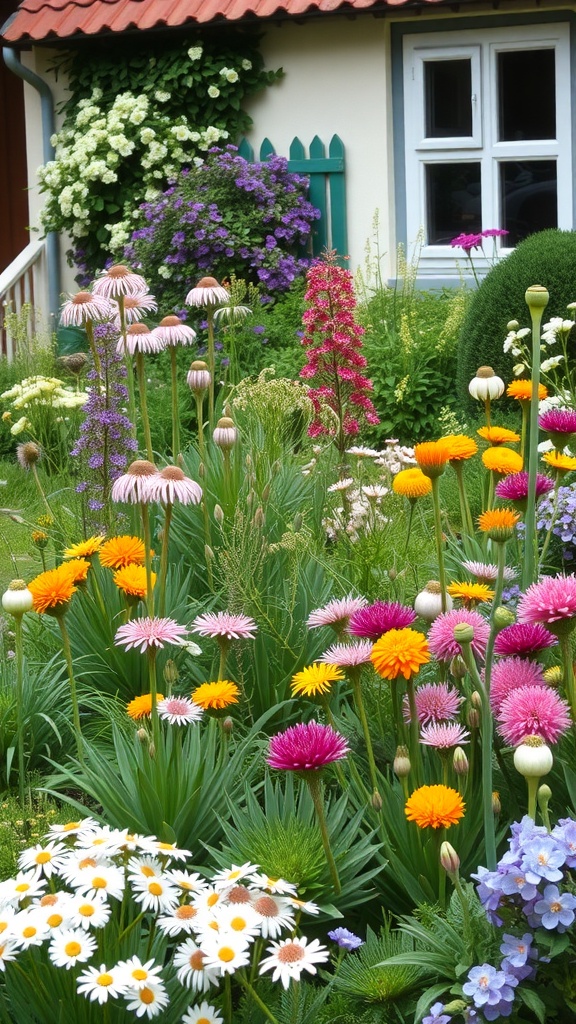
In the image, you can see alliums in various colors, standing tall among a sea of other flowers. The pink and purple hues of the alliums contrast beautifully with the bright oranges and yellows of the surrounding blooms. This mix creates a lively atmosphere, perfect for a cozy cottage garden.
Alliums are not just pretty; they are also easy to grow. They thrive in well-drained soil and full sun, making them a great choice for gardeners of all levels. Plus, they attract pollinators, which is a bonus for any garden.
Incorporating alliums into your cottage garden can enhance its charm. They can be planted in clusters or mixed with other flowers for a more natural look. Their tall stems provide height and structure, making them a wonderful focal point in any garden design.
Creating a Fragrant Allium Display
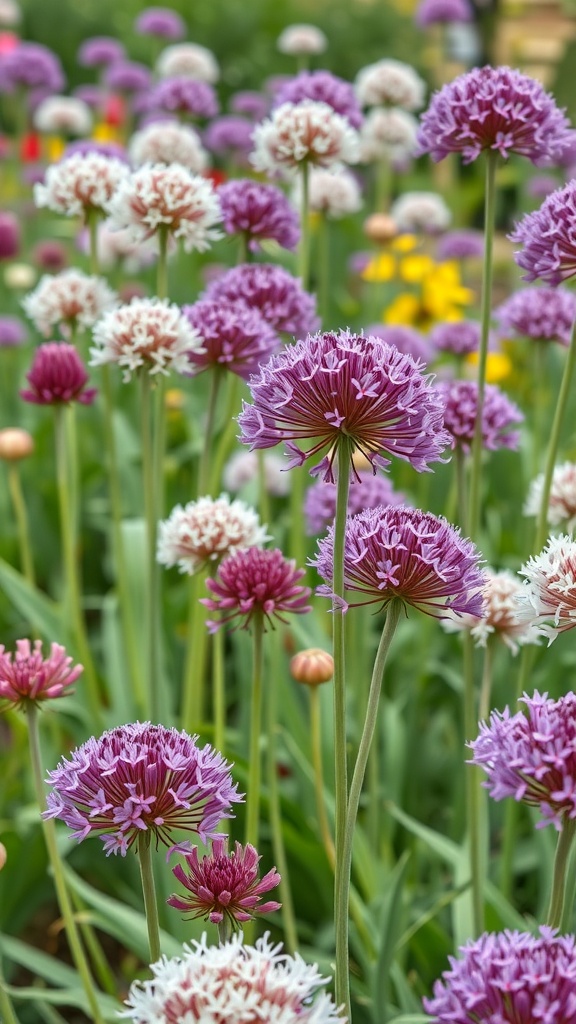
Alliums bring a unique charm to any garden. With their tall stems and vibrant blooms, they create a stunning visual display. The image shows a variety of alliums in shades of purple and white, standing proudly among lush green foliage. Their round flower heads add a playful touch to the garden.
Planting alliums in clusters can enhance their impact. Consider mixing different varieties for a colorful effect. The contrast between the deep purples and bright whites creates a delightful scene. These flowers not only look good but also emit a mild, pleasant fragrance that can attract pollinators.
To create a fragrant allium display, choose a sunny spot in your garden. Prepare the soil well, ensuring it drains properly. Plant the bulbs in the fall for a spring bloom. Water them regularly, but avoid overwatering. With a little care, you’ll enjoy a beautiful and fragrant garden filled with alliums.
Combining Alliums with Bulbs
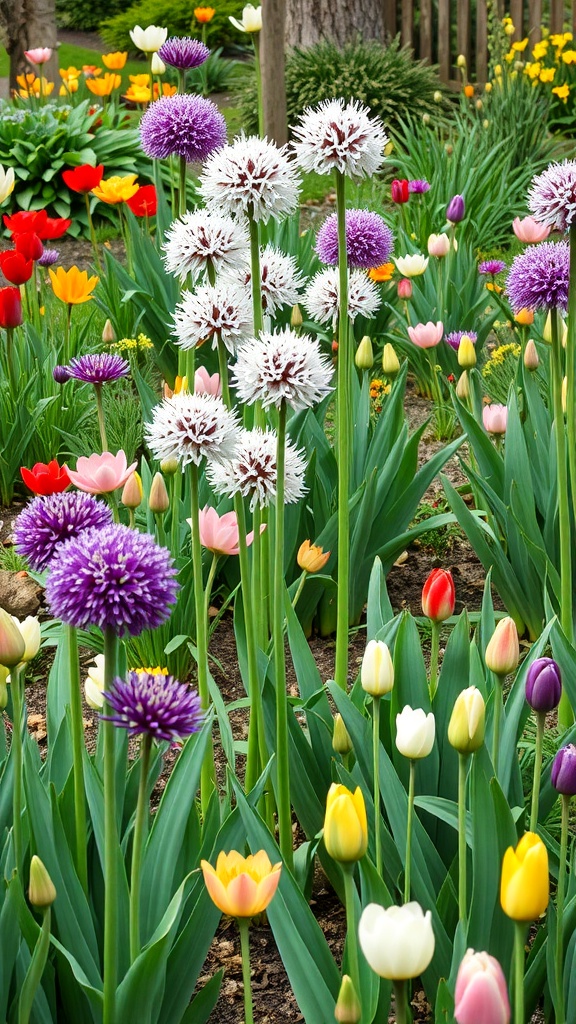
Alliums are a fantastic choice for any garden, especially when paired with other bulbs. The image showcases a vibrant mix of alliums and tulips, creating a colorful display that draws the eye. The tall, round blooms of the alliums stand proudly among the shorter, delicate tulips, offering a lovely contrast in height and shape.
When you combine alliums with bulbs like tulips, you get a stunning visual effect. The alliums add a unique texture and form, while the tulips bring a variety of colors. This combination can brighten up any garden space, making it feel lively and inviting.
Planting these together is easy. Choose a sunny spot in your garden and layer your bulbs. Alliums typically bloom later than tulips, so you’ll enjoy a longer flowering season. This way, as the tulips fade, the alliums take center stage, ensuring your garden remains beautiful throughout the spring.
Planting Alliums for Year-Round Interest
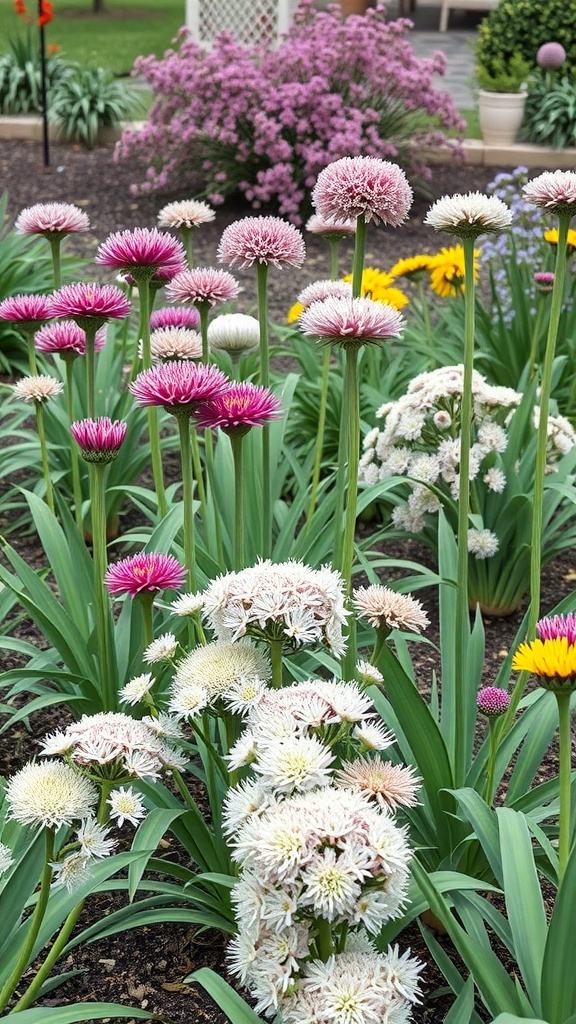
Alliums are a delightful addition to any garden, bringing unique shapes and vibrant colors. In the image, you can see a stunning display of various allium flowers, showcasing their round, fluffy blooms in shades of pink, white, and purple. These flowers not only look beautiful but also attract pollinators, making them a great choice for a lively garden.
When planting alliums, timing is key. Fall is the best time to plant the bulbs, allowing them to establish roots before winter. They thrive in well-drained soil and prefer full sun. Once they bloom in spring, their tall stems and striking flowers create a stunning focal point.
To keep your garden interesting year-round, consider pairing alliums with other perennials that bloom at different times. This way, even when the alliums fade, your garden will still have color and life. Mixing in plants like daisies or lavender can create a beautiful contrast and extend the blooming season.
Alliums for Drought-Tolerant Gardens
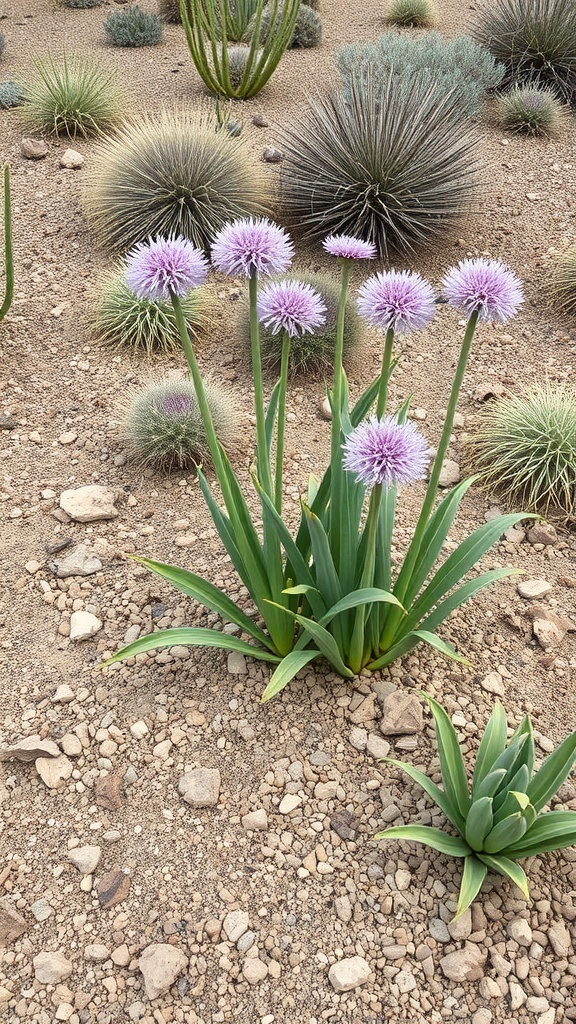
Alliums are a fantastic choice for drought-tolerant gardens. Their unique round blooms add a pop of color and interest to any landscape. In the image, you can see clusters of alliums standing tall, surrounded by various drought-resistant plants. This combination creates a striking visual effect.
These flowers thrive in dry conditions, making them perfect for areas with limited water. They require minimal care once established, which is great for gardeners looking for low-maintenance options. The purple hues of the alliums contrast beautifully with the earthy tones of the surrounding landscape.
Incorporating alliums into your garden not only enhances its beauty but also supports local wildlife. Bees and butterflies are drawn to their flowers, making your garden a lively habitat. So, if you’re planning a drought-tolerant garden, consider adding alliums for both their aesthetic appeal and ecological benefits.
Alliums for Vertical Gardening
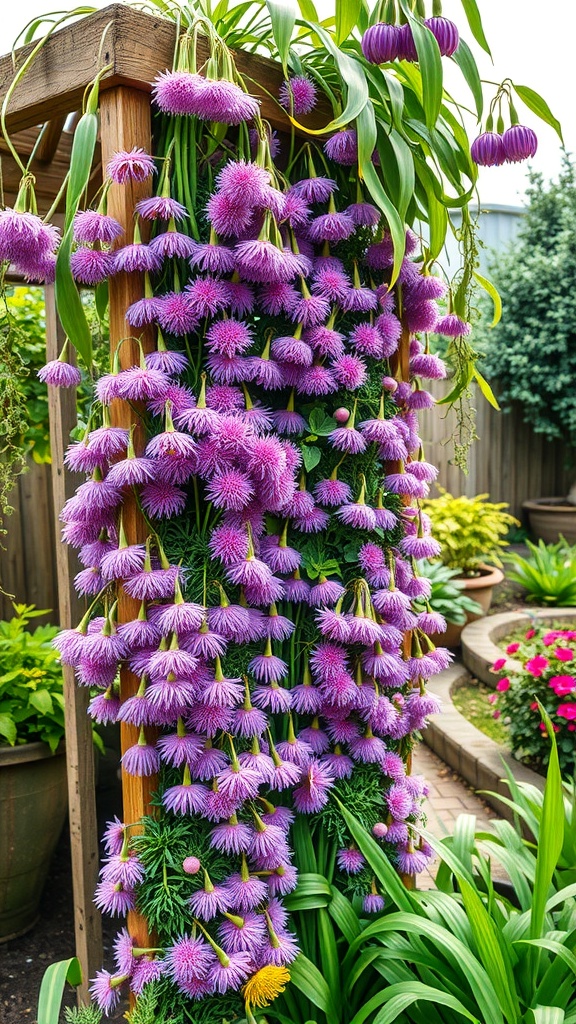
Alliums bring a unique charm to vertical gardening. Their tall, striking flowers can create a stunning focal point in any garden space. In the image, you can see vibrant purple alliums cascading down a wooden structure. This setup not only saves space but also adds layers and depth to the garden.
Vertical gardening is perfect for those with limited ground space. Alliums thrive in this environment, as their height allows them to stand out beautifully. The combination of their round blooms and long stems creates an eye-catching display that draws attention.
Incorporating alliums into your vertical garden can also enhance the overall aesthetic. The playful nature of their blooms, paired with lush green foliage, creates a lively atmosphere. Plus, they attract pollinators, making your garden a buzzing hub of activity.
When planning your vertical garden, think about the arrangement of alliums alongside other plants. Mixing textures and colors can create a vibrant tapestry of life. With a bit of creativity, you can transform any small space into a stunning vertical garden filled with alliums.
Alliums in Shade Gardens
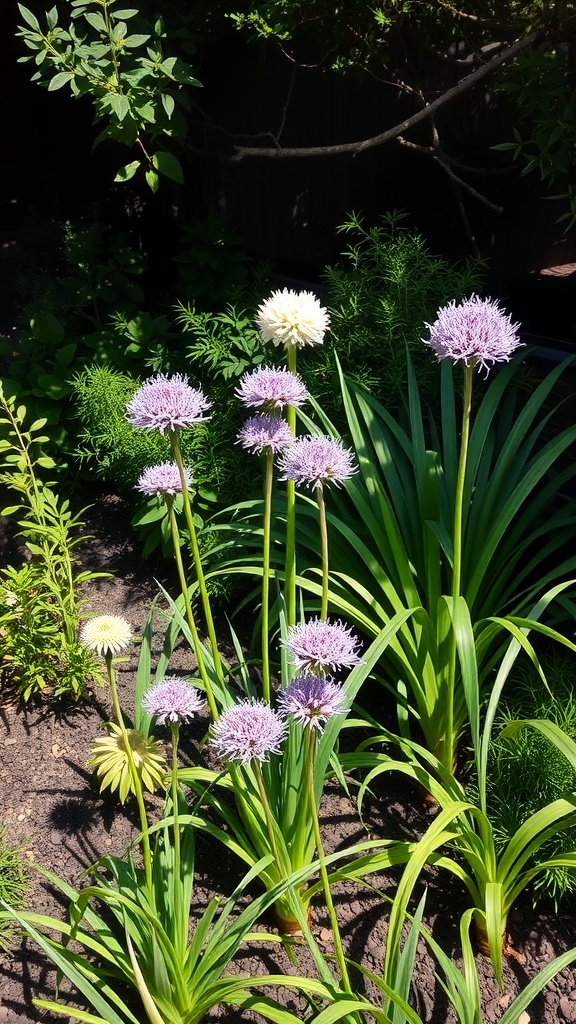
Alliums bring a unique charm to shade gardens. Their round, globe-like flowers create a striking contrast against the lush greenery. In the image, you can see a mix of purple and white alliums standing tall among other plants. This variety adds a playful touch to the garden, making it visually interesting.
These flowers thrive in partial shade, making them perfect for areas where sunlight is limited. They bloom in late spring to early summer, providing a burst of color just when the garden starts to wake up. The tall, slender stems of alliums help to draw the eye upward, adding height to your garden design.
Incorporating alliums into your shade garden can enhance its overall appeal. They pair well with ferns and other shade-loving plants, creating a harmonious look. Plus, their unique shape and color can serve as focal points, guiding visitors through your garden space.
Alliums in Mixed Flower Beds
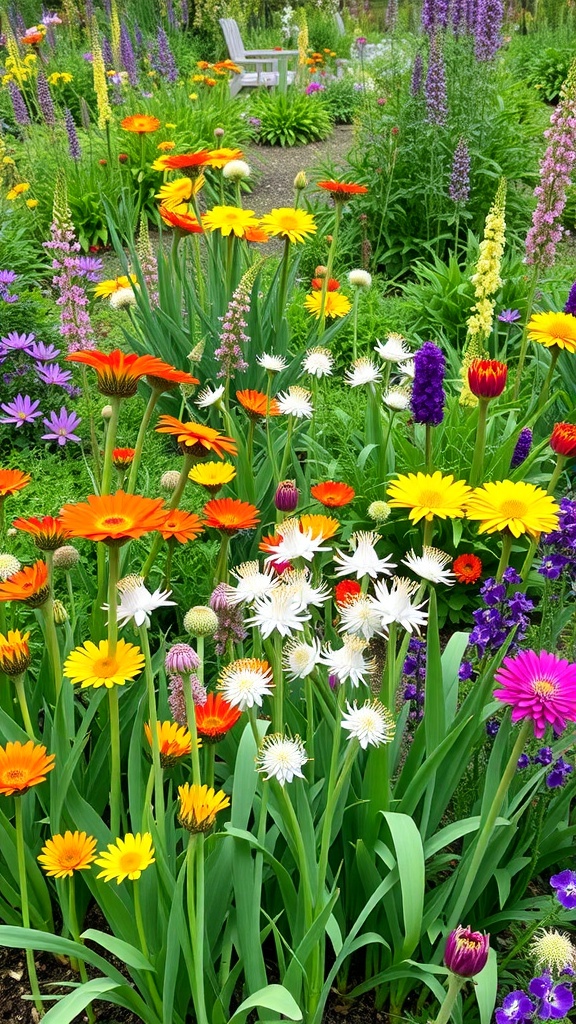
Alliums bring a unique flair to mixed flower beds. Their tall, spherical blooms add height and interest among shorter flowers. In the image, you can see a vibrant array of colors and shapes. The alliums stand proudly, surrounded by cheerful daisies and colorful gerberas.
Mixing alliums with other flowers creates a lively scene. The contrast between the round allium heads and the flat petals of daisies is visually striking. This combination invites the eye to explore every corner of the garden.
When planning your flower bed, consider the blooming times of alliums. They typically bloom in late spring, which can complement early summer flowers beautifully. This layering of blooms ensures your garden stays colorful for a longer period.
Don’t forget to think about the foliage too! The long, slender leaves of alliums can add texture to your flower bed. Pair them with broader leaves from other plants for a dynamic look. Overall, alliums are a fantastic choice for adding depth and character to your garden.
The Role of Alliums in Sustainable Gardening
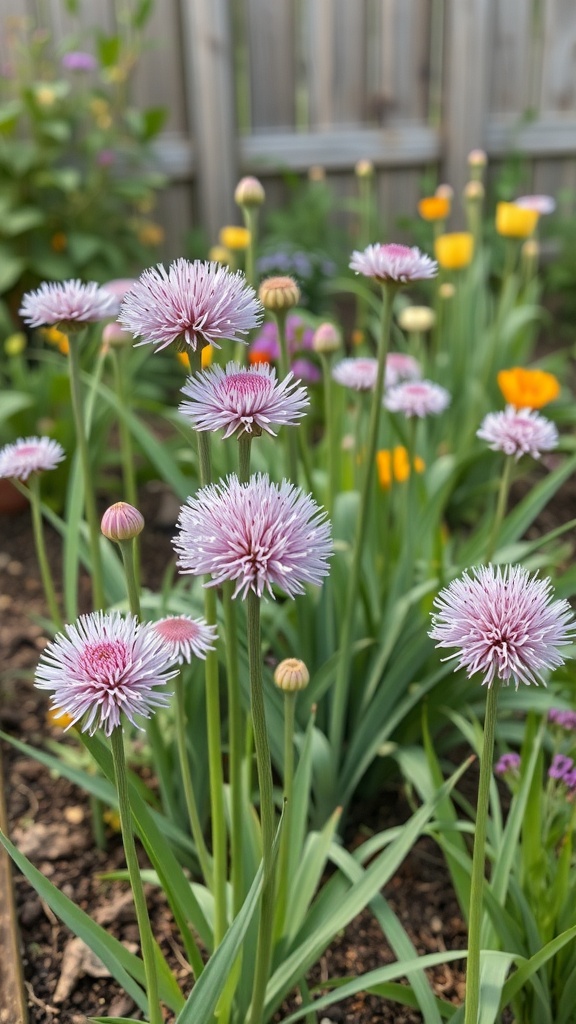
Alliums are more than just pretty flowers; they play a significant role in sustainable gardening. These plants, known for their unique globe-shaped blooms, can enhance your garden’s health and beauty. In the image, you can see vibrant alliums surrounded by other colorful flowers, creating a lively and inviting space.
One of the best things about alliums is their ability to attract pollinators. Bees and butterflies love these blooms, which helps support local ecosystems. When you plant alliums, you’re not just adding color; you’re also providing food for these essential creatures.
Alliums are also known for their pest-repelling qualities. Their strong scent can deter unwanted insects, reducing the need for chemical pesticides. This makes them a great choice for anyone looking to maintain an eco-friendly garden.
Moreover, alliums are hardy and require minimal care. They thrive in various soil types and can withstand drought conditions. This resilience makes them a smart choice for sustainable gardening, as they can flourish with less water and attention.
Incorporating alliums into your garden design not only beautifies your space but also promotes biodiversity and reduces environmental impact. So, next time you’re planning your garden, think about adding these wonderful plants!
Creating a Whimsical Allium Pathway
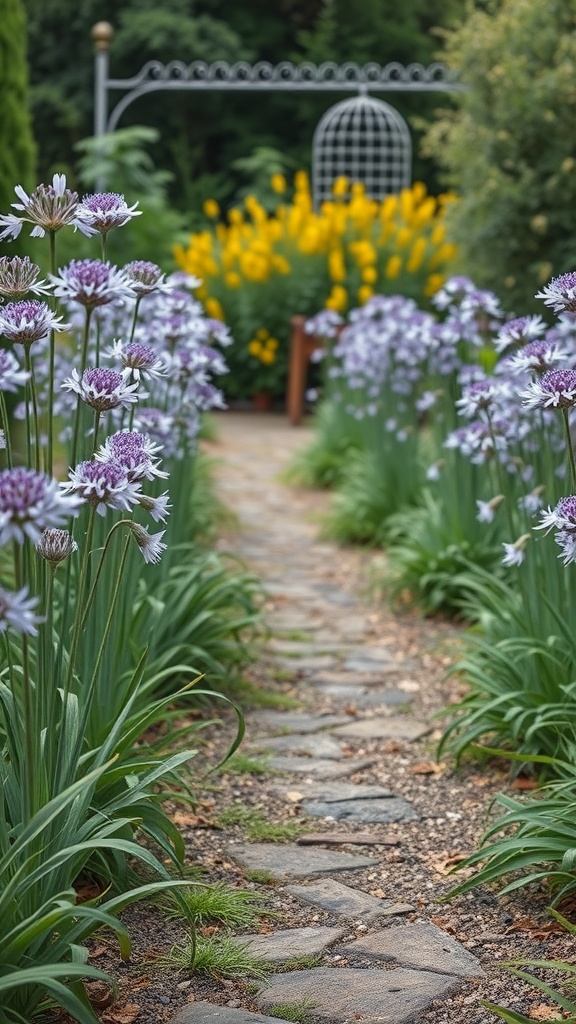
Imagine stepping into a garden where vibrant alliums line a charming pathway. The tall, purple flowers sway gently in the breeze, creating a delightful scene. This pathway invites you to explore further into the garden’s beauty.
The stone path meanders through lush greenery, leading to a lovely archway. This arch adds a touch of elegance and serves as a perfect frame for the colorful blooms in the background. The bright yellow flowers pop against the purple alliums, making the whole area feel cheerful and inviting.
Creating a whimsical allium pathway is all about combining colors and textures. Start by planting alliums in clusters along the edges of your path. Their unique shape and height will draw the eye and create a sense of movement. Pair them with other flowers that complement their color, like sunny yellows or soft whites, to enhance the visual appeal.
Don’t forget the path itself! Using natural stone or gravel can add a rustic charm. As you walk along, the crunch of gravel underfoot adds to the experience. This pathway not only guides you through the garden but also encourages you to stop and admire the beauty around you.
Alliums in Japanese Gardens
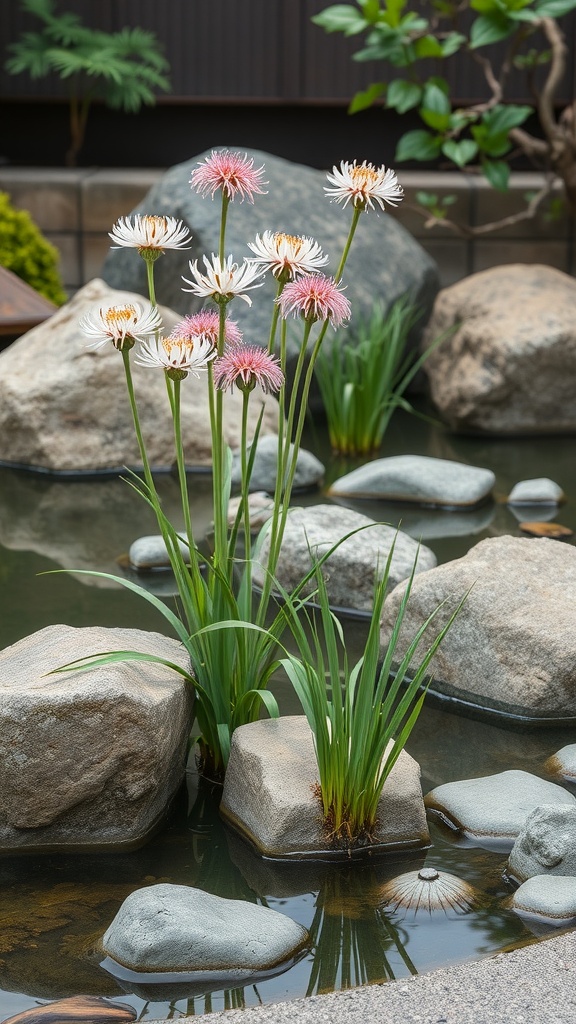
Japanese gardens often blend nature and design in a serene way. Alliums, with their unique shapes and colors, fit right into this aesthetic. These flowers add a pop of color and a touch of whimsy to the landscape.
In the image, you can see alliums standing tall near a tranquil pond. Their delicate blooms contrast beautifully with the smooth stones and lush greenery around them. This combination creates a peaceful scene, perfect for reflection and relaxation.
Alliums can symbolize unity and harmony, making them a fitting choice for Japanese gardens. Their round flower heads remind us of the beauty in simplicity, a key principle in Japanese design.
When visiting a Japanese garden, take a moment to appreciate the placement of alliums. They often highlight pathways or draw attention to water features, enhancing the overall experience of the garden.
Alliums in Wildlife Gardens
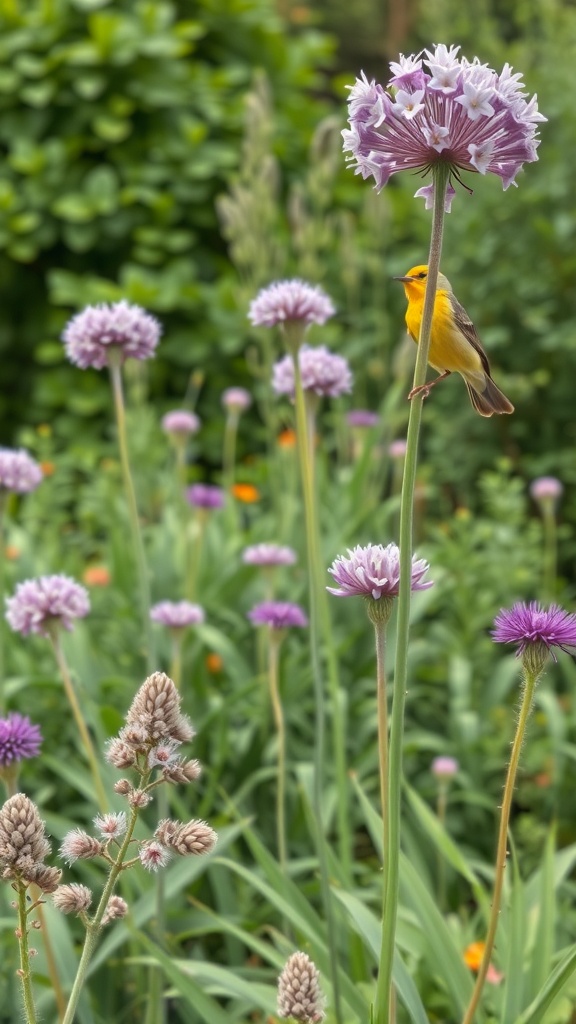
Alliums are a fantastic addition to wildlife gardens. Their tall, striking flowers not only catch the eye but also attract various pollinators. In the image, you can see a vibrant yellow bird perched on a tall allium stem, enjoying the blooms. This showcases how these plants can create a lively environment.
These flowers come in different shapes and sizes, making them versatile for any garden layout. The purple hues of the alliums stand out beautifully against the green backdrop, creating a stunning visual. They provide a great source of nectar for bees and butterflies, helping to support local wildlife.
Incorporating alliums into your garden can enhance its beauty while promoting biodiversity. The combination of flowers and visiting birds adds a dynamic element, making your outdoor space more enjoyable. So, if you want to attract wildlife and enjoy a colorful display, consider planting alliums in your garden!
Alliums for Pollinator-Friendly Gardens
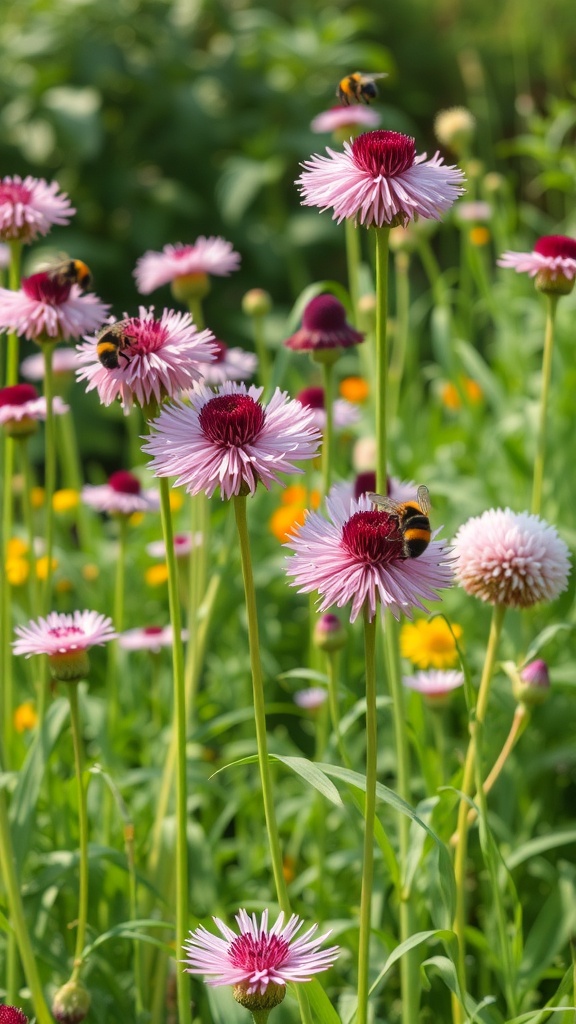
Alliums are not just beautiful; they are also fantastic for attracting pollinators. In the image, you can see vibrant allium flowers standing tall, their unique shapes and colors drawing in bees and other insects. These flowers create a lively scene in any garden, providing a feast for both the eyes and the pollinators.
Planting alliums in your garden can help support local ecosystems. The bees buzzing around the flowers show how much they love these blooms. By including alliums, you can create a welcoming environment for these important creatures. This not only helps the bees but also enhances the overall health of your garden.
Alliums bloom at different times, which means they can provide food for pollinators throughout the growing season. This variety ensures that there’s always something in bloom, keeping your garden lively and buzzing with activity. So, if you’re looking to make your garden more pollinator-friendly, consider adding some alliums to the mix!
Alliums and Water Features
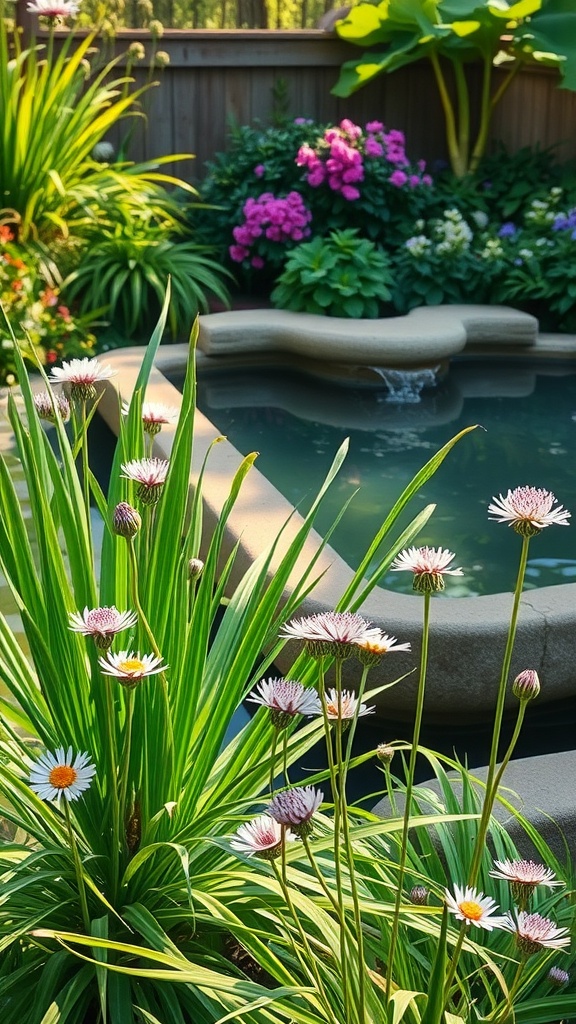
Alliums bring a unique flair to gardens, especially when paired with water features. In the image, you can see vibrant green foliage and delicate flowers that create a lovely contrast against the tranquil water. The gentle curves of the water feature complement the natural shapes of the plants, making the scene feel harmonious.
Water features, like the one shown, can enhance the beauty of alliums. The sound of flowing water adds a calming effect, making it a perfect spot for relaxation. Imagine sitting by this serene setting, surrounded by colorful blooms and the soothing sound of water.
Incorporating alliums around water features can also attract pollinators. Bees and butterflies are drawn to their blooms, adding life to the garden. This creates a vibrant ecosystem, making your garden not just beautiful but also lively.
Alliums for Cutting Gardens
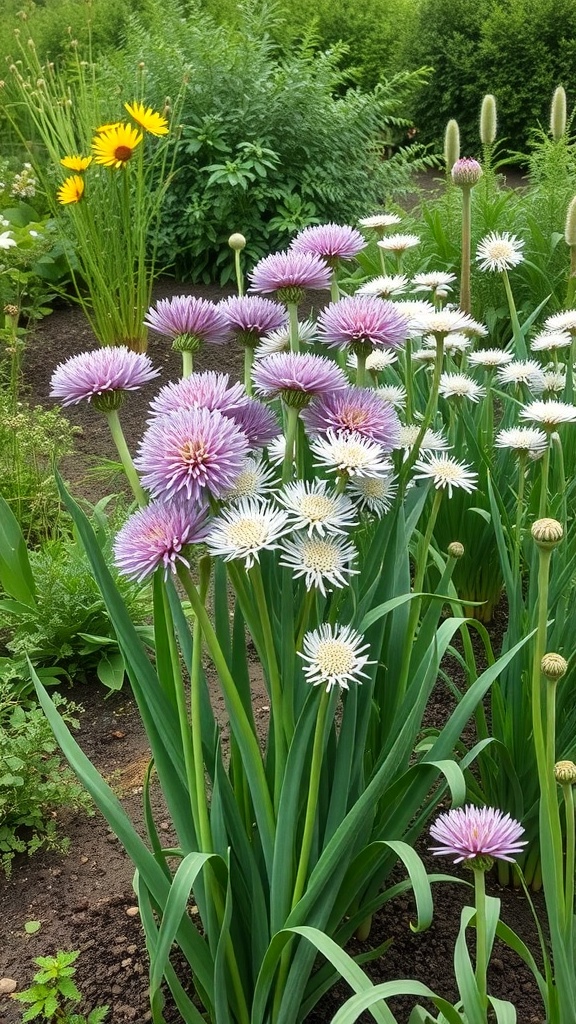
Alliums are a fantastic choice for cutting gardens. Their unique shapes and vibrant colors make them stand out in any bouquet. In the image, you can see a mix of purple and white alliums, creating a lovely contrast against the lush green background.
These flowers are not just pretty; they are also sturdy. They hold up well when cut, making them perfect for arrangements. The tall stems and round blooms add a playful touch to floral displays.
Growing alliums is easy. They thrive in well-drained soil and enjoy full sun. Planting them in clusters can create a stunning visual impact. Plus, they attract pollinators, which is a bonus for any garden.
When it comes to cutting, it’s best to harvest them in the morning when the blooms are fresh. This ensures they last longer in your vase. With their striking appearance, alliums can elevate any floral arrangement, making them a must-have for cutting gardens.
Alliums in Mediterranean Gardens
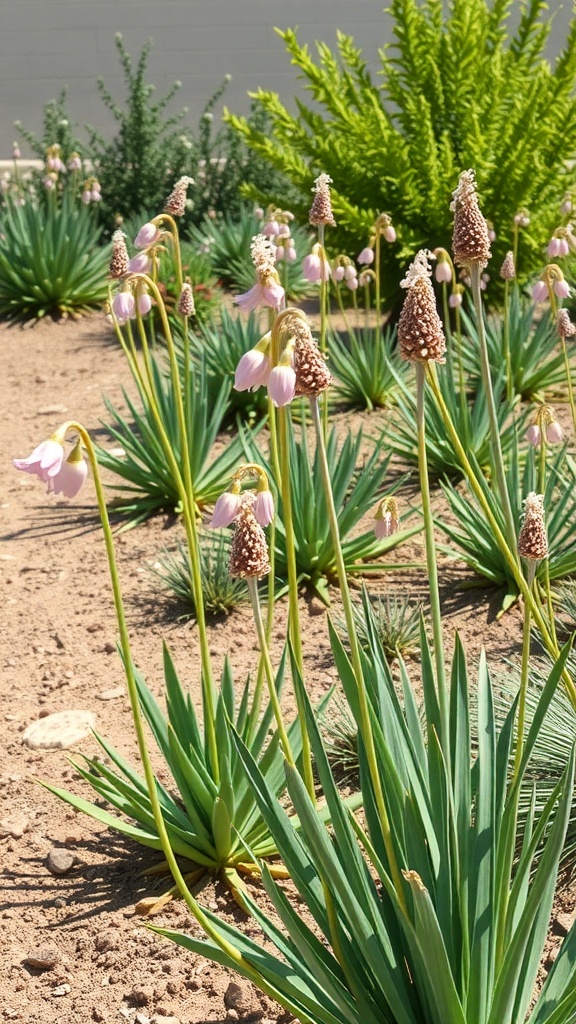
Alliums bring a unique charm to Mediterranean gardens. Their tall, slender stems and striking flower heads create a delightful contrast against the lush greenery typical of this region.
In the image, you can see alliums with their distinctive bell-shaped flowers in soft pink hues. These blooms add a touch of elegance to the landscape, making them a favorite among garden enthusiasts.
The surrounding foliage, with its vibrant green leaves, complements the alliums beautifully. This combination not only enhances the visual appeal but also supports local wildlife, attracting pollinators like bees and butterflies.
Alliums thrive in the Mediterranean climate, preferring well-drained soil and plenty of sunlight. They are low-maintenance and can easily adapt to various garden styles, from formal to more relaxed settings.
Incorporating alliums into your garden can create a stunning focal point. Their unique shapes and colors can be paired with other Mediterranean plants, like lavender or rosemary, to create a harmonious and inviting space.
Creating Seasonal Displays with Alliums
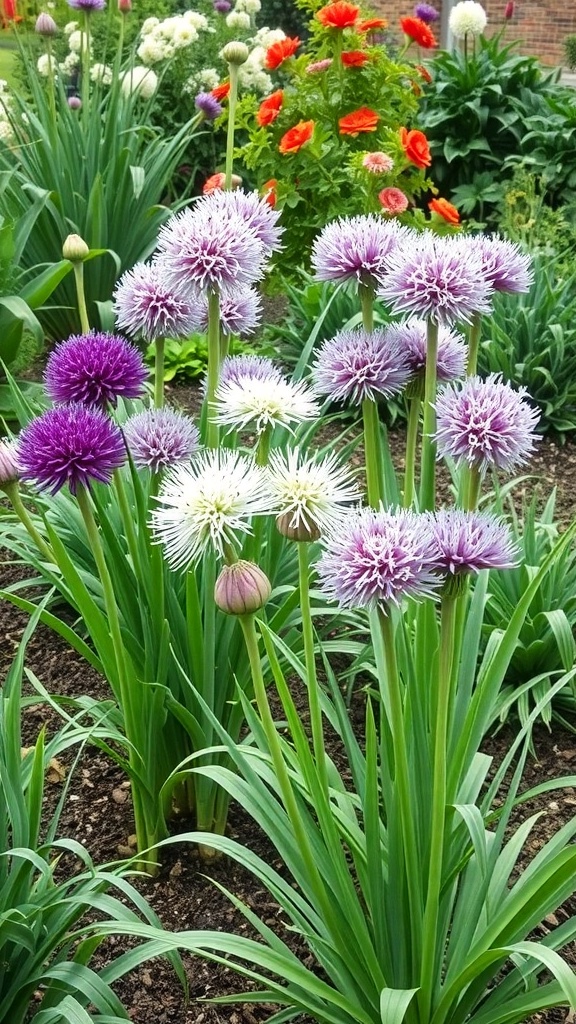
Alliums bring a unique flair to any garden. Their round, globe-like flowers create a stunning visual impact. In this image, you can see a variety of alliums in different shades of purple and white, standing tall among lush green leaves. The contrast with the vibrant red flowers in the background adds to the garden’s charm.
These flowers bloom in spring and early summer, making them perfect for seasonal displays. Planting them in clusters can create a striking effect. They pair well with other flowers, like the red poppies seen here, which can enhance the overall look of your garden.
Alliums are not just pretty; they are also low-maintenance. Once planted, they require minimal care, allowing you to enjoy their beauty without much effort. Consider mixing different varieties for a more dynamic display. Their unique shapes and colors can transform any garden into a vibrant space.
Alliums and Garden Art
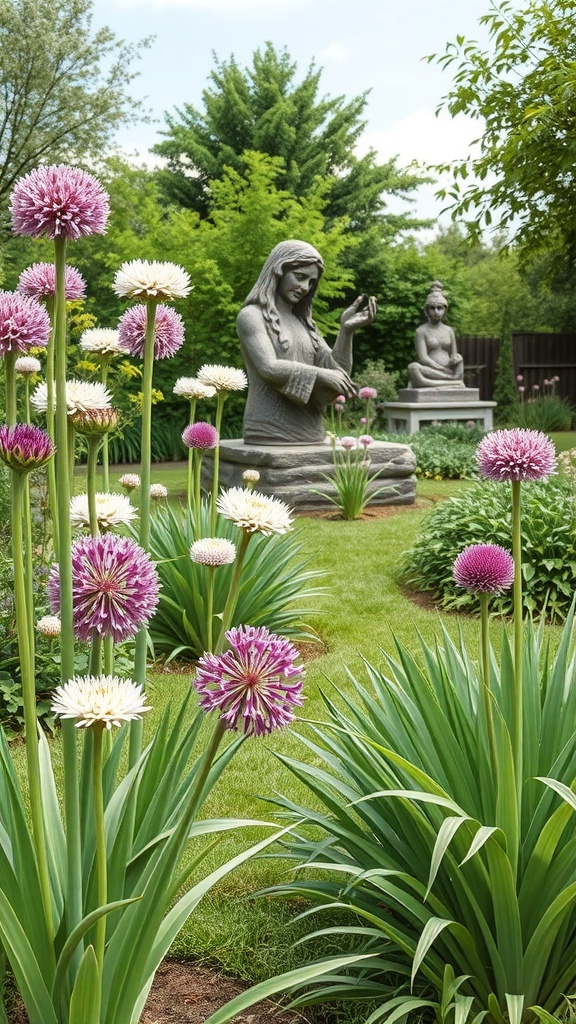
Alliums bring a unique charm to any garden, especially when paired with art. In the image, you can see vibrant alliums standing tall, showcasing their beautiful purple and white blooms. These flowers not only add color but also create a lively atmosphere.
The garden features stunning sculptures that enhance the overall aesthetic. A graceful figure sits among the alliums, inviting visitors to pause and appreciate the beauty around them. This combination of nature and art creates a serene space, perfect for relaxation.
Alliums are known for their striking appearance, and when they bloom, they draw attention. Their round flower heads contrast beautifully with the smooth lines of the sculptures. This mix of shapes and colors makes the garden feel dynamic and welcoming.
Incorporating art into your garden can transform it into a personal sanctuary. Whether it’s a statue, a fountain, or decorative stones, these elements can complement the natural beauty of flowers like alliums. Together, they create a harmonious environment that invites creativity and reflection.
Alliums in Tropical Gardens
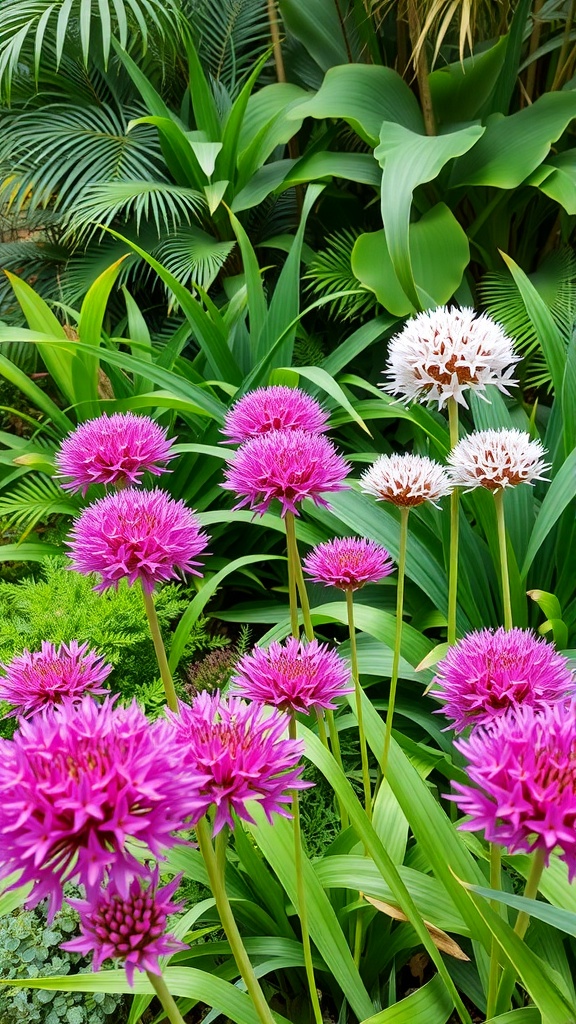
Alliums bring a unique charm to tropical gardens. Their round, fluffy blooms stand out beautifully against the lush greenery. In this image, you can see vibrant pink and white alliums, creating a stunning contrast with the surrounding leaves.
These flowers thrive in warm climates, making them perfect for tropical settings. They add a pop of color and texture, enhancing the overall garden design. The tall stems of the alliums create vertical interest, drawing the eye upward.
Incorporating alliums into your garden can attract pollinators, too. Bees and butterflies love these flowers, making your garden a lively spot. Pairing them with tropical plants can create a vibrant and inviting atmosphere.
Pairing Alliums with Roses
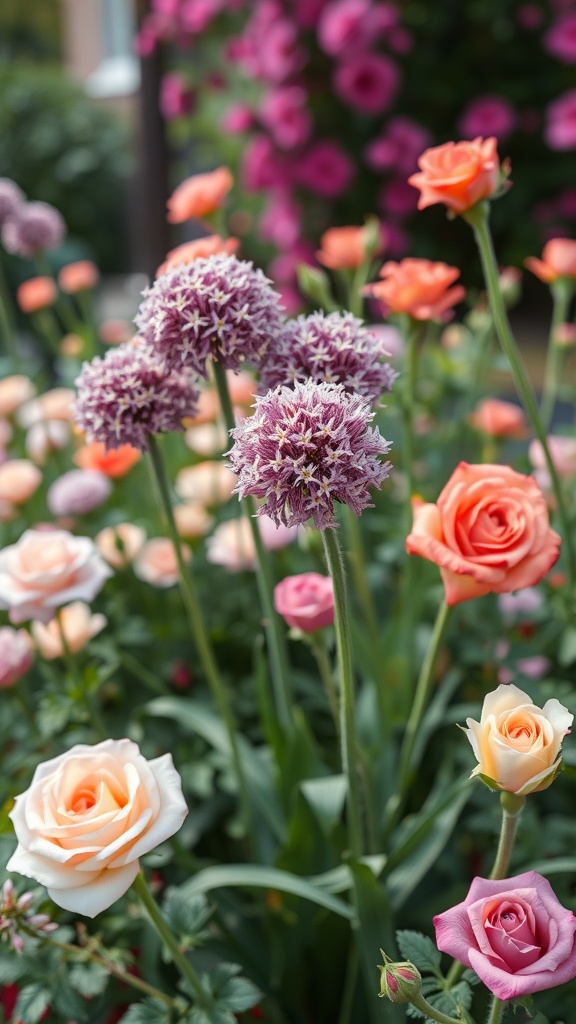
Alliums and roses make a stunning combination in any garden. The round, purple blooms of alliums stand tall among the soft, layered petals of roses. This pairing creates a delightful contrast in both texture and color.
In the image, you can see vibrant roses in shades of pink and peach surrounding the striking alliums. The alliums add a unique flair, drawing the eye upward. This mix not only looks beautiful but also attracts various pollinators, enhancing the garden’s ecosystem.
When planting, consider the height difference. Alliums can reach impressive heights, so placing them behind shorter roses ensures that each flower gets its moment to shine. This arrangement also allows for easy maintenance and care.
To keep the display fresh, choose roses that bloom at different times. This way, you can enjoy a continuous show of color throughout the growing season. Pairing these flowers creates a lively and inviting atmosphere in any outdoor space.
Alliums and Seasonal Color
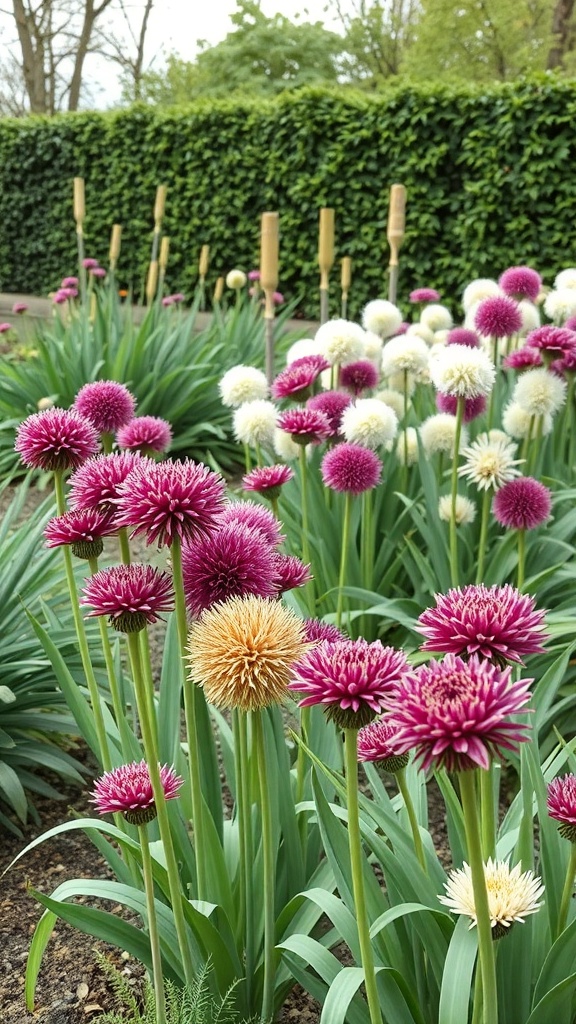
Alliums bring a burst of color and texture to any garden. In the image, you can see a lovely mix of purple and white alliums standing tall among lush green leaves. Their unique shapes and vibrant hues create a striking visual appeal.
These flowers bloom in spring, making them perfect for adding seasonal color. The round, fluffy heads of alliums contrast beautifully with the slender stems, creating a playful look. This combination of colors and forms can brighten up any garden space.
Planting alliums in clusters can enhance their impact. They work well with other spring flowers, creating a lively atmosphere. Whether you have a small garden or a larger landscape, alliums can be a fantastic choice for seasonal color.
Alliums and Companion Planting
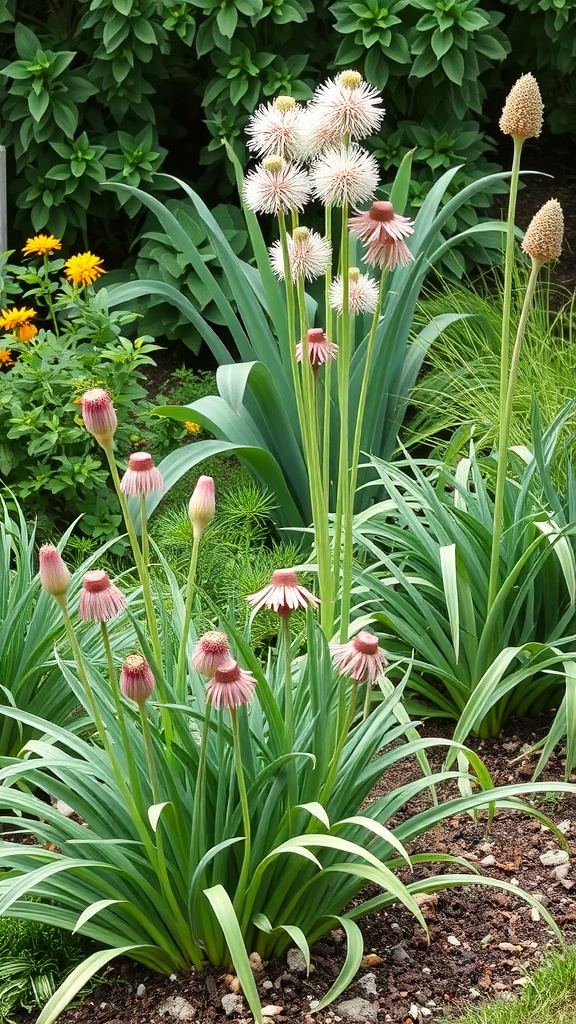
Alliums are a fantastic choice for any garden. Their unique shapes and colors make them stand out. In the image, you can see various allium plants with their striking flowers. The tall, spiky blooms add height and interest to the garden bed.
Companion planting with alliums can be very beneficial. They pair well with many plants, helping to deter pests. For example, planting alliums near vegetables can protect them from harmful insects. This natural pest control is a great way to keep your garden healthy.
Alliums also attract pollinators like bees and butterflies. This helps to create a lively and vibrant garden. Their flowers bloom at different times, providing a continuous source of nectar. This makes them a wonderful addition to any planting scheme.
When planning your garden, think about mixing alliums with colorful flowers or leafy greens. This not only looks beautiful but also promotes a healthy ecosystem. With alliums in your garden, you can enjoy both beauty and functionality.
Alliums in Historical Gardens
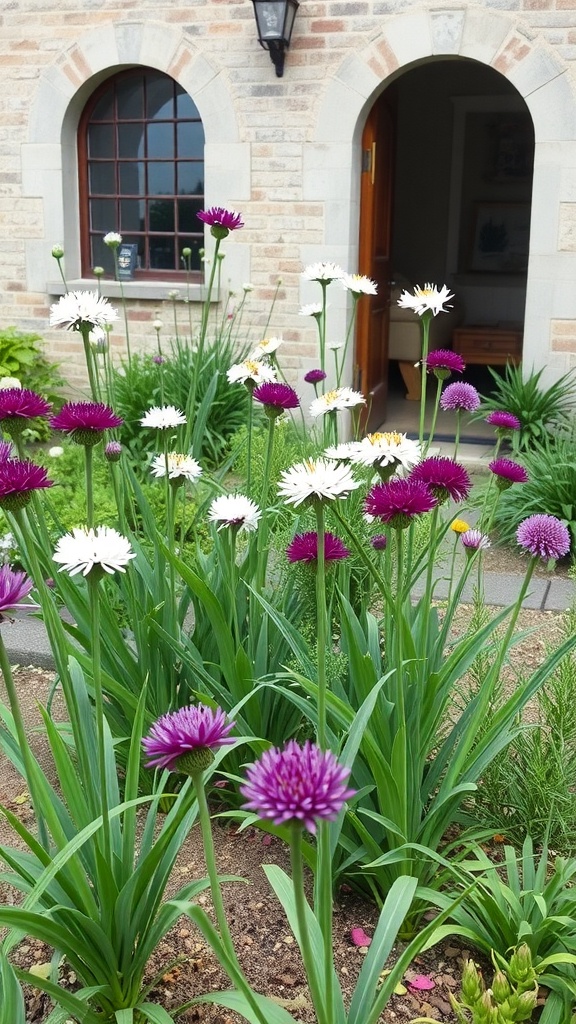
Alliums have a long history in gardens, dating back to ancient times. These striking flowers, with their unique shapes and vibrant colors, have graced many historical gardens around the world. In the image, you can see a lovely arrangement of alliums in various shades of purple and white, creating a cheerful display.
These flowers are not just beautiful; they also symbolize unity and harmony. Many historical gardens featured alliums for their aesthetic appeal and their ability to attract pollinators. The mix of colors in the image showcases how alliums can complement other plants, enhancing the overall beauty of the garden.
In gardens of the past, alliums were often planted alongside herbs and vegetables. This practice not only added visual interest but also helped deter pests. The image captures the essence of a well-planned garden, where alliums play a vital role in both beauty and function.
Creating a Bold Allium Statement
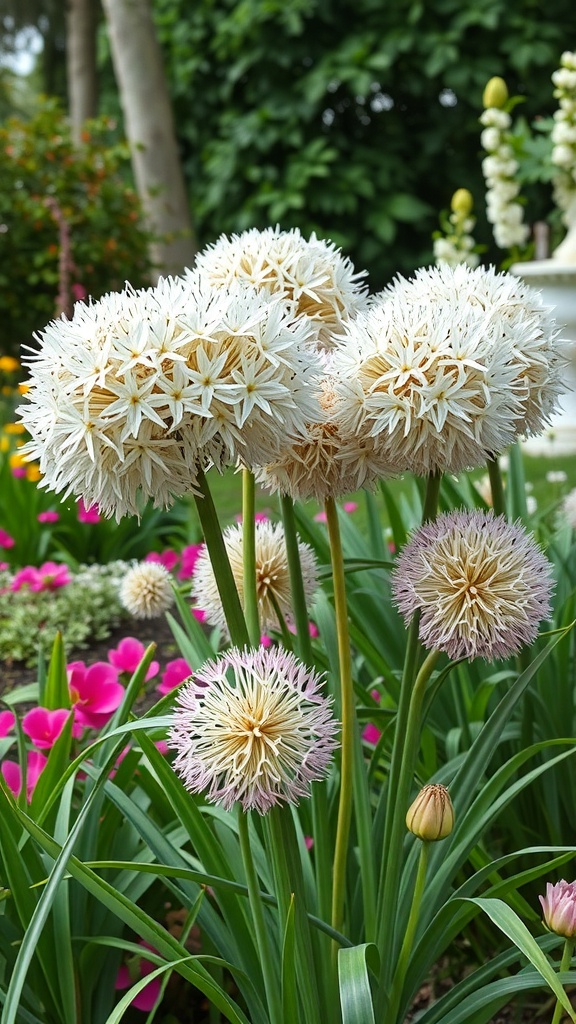
Alliums are a fantastic choice for making a bold statement in your garden. Their unique spherical flower heads bring a touch of whimsy and elegance. In the image, you can see striking alliums with their star-shaped blooms standing tall among vibrant pink flowers. This mix creates a lively contrast that catches the eye.
These flowers come in various sizes and colors, but the ones shown here are particularly stunning with their creamy white and soft pink hues. They add a playful element while still looking sophisticated. Planting them in clusters can amplify their impact, making your garden feel more dynamic.
Alliums thrive in sunny spots and well-drained soil. They are low-maintenance and can last for years, making them a great investment for any garden. Pairing them with other colorful blooms, like the pink flowers seen here, can create a beautiful tapestry of color that changes with the seasons.
Alliums for Coastal Gardens
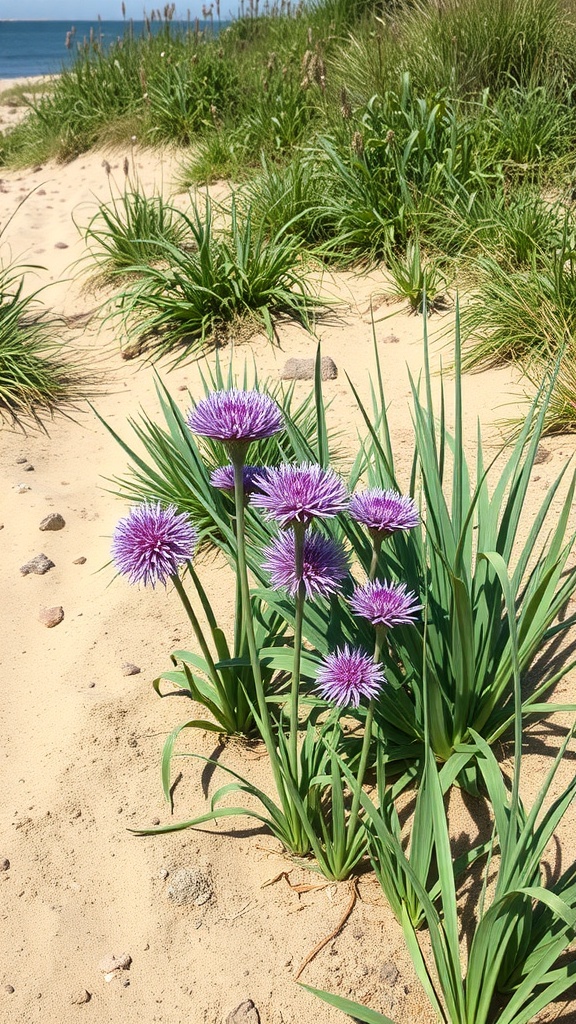
Coastal gardens can be a unique challenge, but alliums are a fantastic choice for these sandy landscapes. The image shows vibrant purple allium flowers standing tall against a backdrop of beach grass and the ocean. Their striking appearance adds a pop of color to the coastal scenery.
Alliums thrive in well-drained soil, making them perfect for sandy areas. They are drought-tolerant, which is a plus for coastal gardens that can experience dry spells. These flowers not only look great, but they also attract pollinators like bees and butterflies, enhancing the garden’s ecosystem.
When planting alliums, consider grouping them in clusters for a more dramatic effect. Their tall stems and round flower heads create a beautiful focal point. Pair them with other coastal plants, such as ornamental grasses, to create a natural, flowing look.
In summary, alliums are a great addition to coastal gardens. They bring beauty, attract wildlife, and thrive in sandy soils. If you’re looking to brighten up your coastal space, these flowers are a wonderful option.
Alliums for Low-Maintenance Gardens
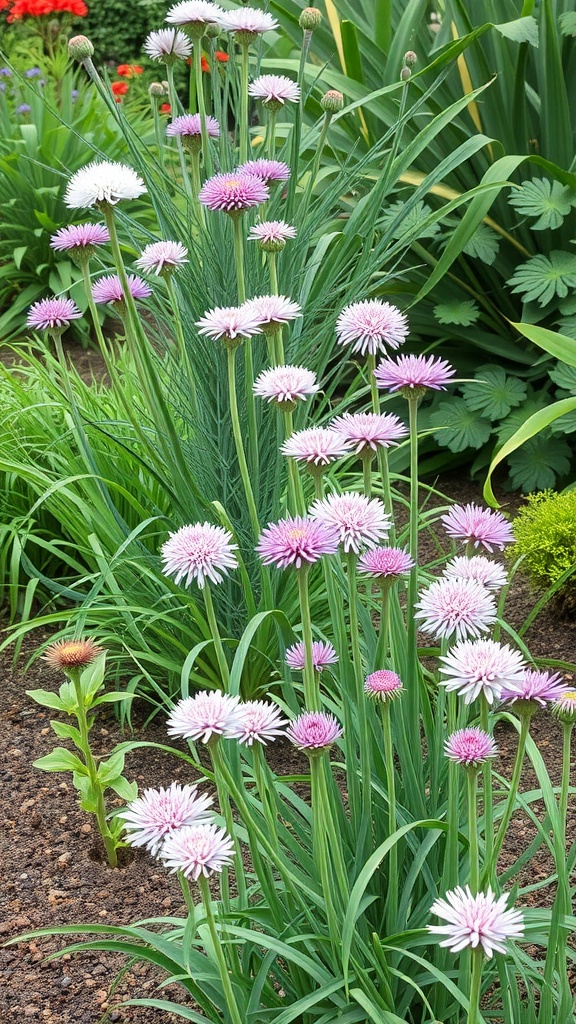
Alliums are a fantastic choice for those looking to create a low-maintenance garden. These beautiful flowers come in various shapes and sizes, adding a pop of color and texture to any space. The image showcases a vibrant display of alliums, with their striking purple and white blooms standing tall among lush green foliage.
One of the best things about alliums is their resilience. They thrive in well-drained soil and require minimal watering once established. This makes them perfect for busy gardeners or those who prefer a more relaxed approach to gardening. The tall stems and round flower heads create a stunning visual effect, making them a focal point in any garden.
In addition to their beauty, alliums are also beneficial for pollinators. Bees and butterflies love these flowers, helping to support local ecosystems. Planting alliums can enhance the biodiversity of your garden while keeping maintenance low. With their unique look and easy care, alliums are a smart addition to any low-maintenance garden.
Designing Garden Layouts with Alliums
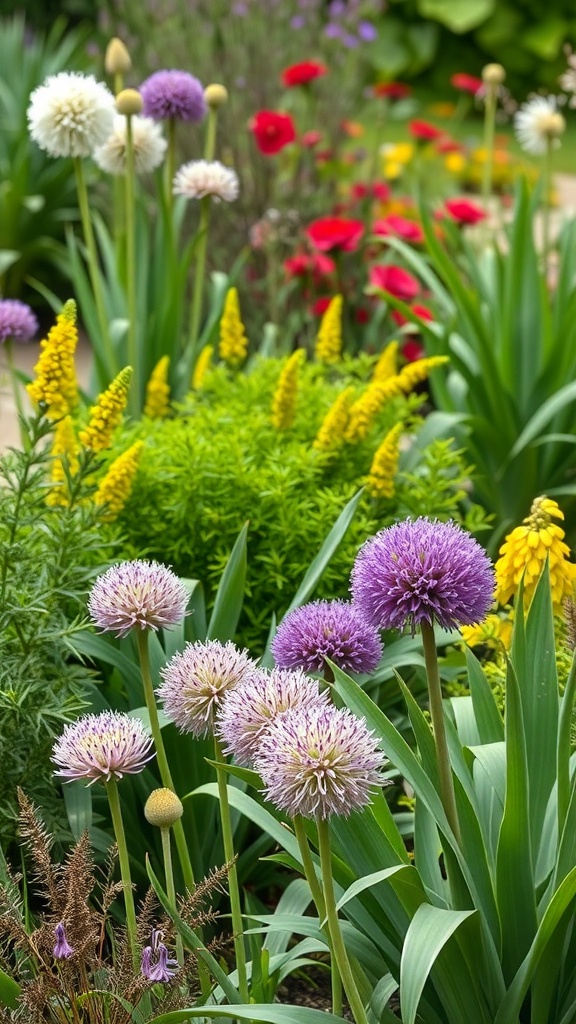
Alliums bring a unique charm to garden layouts. These striking plants, with their round, globe-like flowers, create a focal point that draws the eye. In the image, you can see various allium varieties, showcasing their vibrant colors and interesting shapes. The mix of purple, white, and yellow blooms adds depth and texture to the garden. When planning your garden, consider placing alliums in clusters. This creates a bold statement and enhances their visual impact. Pairing them with lower-growing plants can highlight their height and structure. Don’t forget to think about the seasons. Alliums bloom in spring and summer, so they can complement other flowers that bloom at different times, ensuring your garden looks lively all year round. Overall, alliums are versatile and can fit into many garden styles, from formal to cottage gardens, making them a fantastic choice for any gardener.
Alliums in Minimalist Gardens
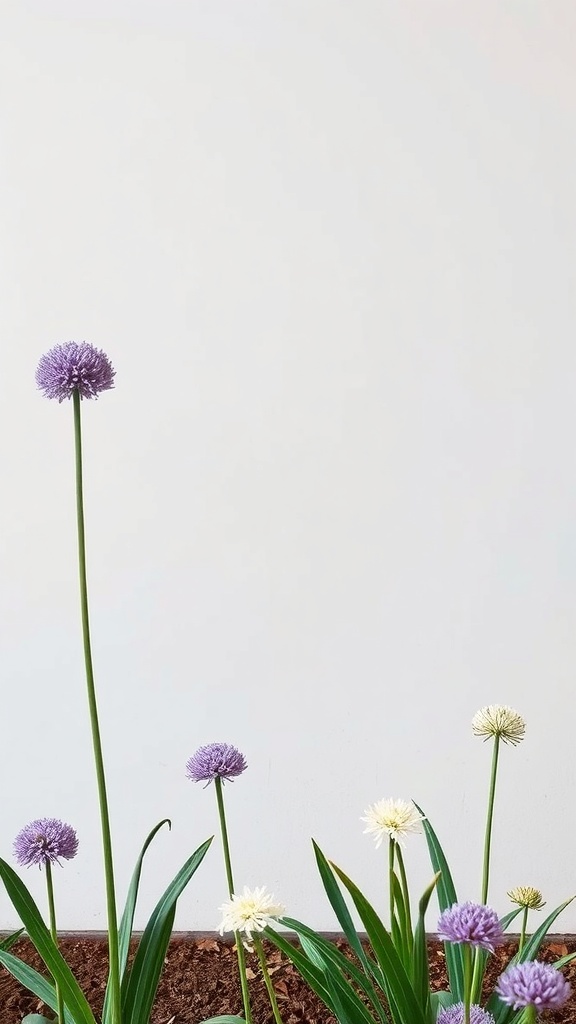
Alliums are a fantastic choice for minimalist gardens. Their tall, slender stems and round, vibrant flower heads create a striking visual impact. In the image, you can see a mix of purple and white alliums standing gracefully against a simple backdrop. This simplicity allows the flowers to shine without distraction.
Minimalist gardens focus on clean lines and a limited color palette. Alliums fit perfectly into this style, adding a pop of color while maintaining an uncluttered look. The contrasting heights of the flowers create a dynamic yet serene atmosphere.
Planting alliums in clusters can enhance their visual appeal. They draw the eye upward, making the garden feel more spacious. Plus, they attract pollinators, adding life to the minimalist design. Overall, alliums are a smart choice for anyone looking to create a stylish, low-maintenance garden.
Alliums and Garden Pathways
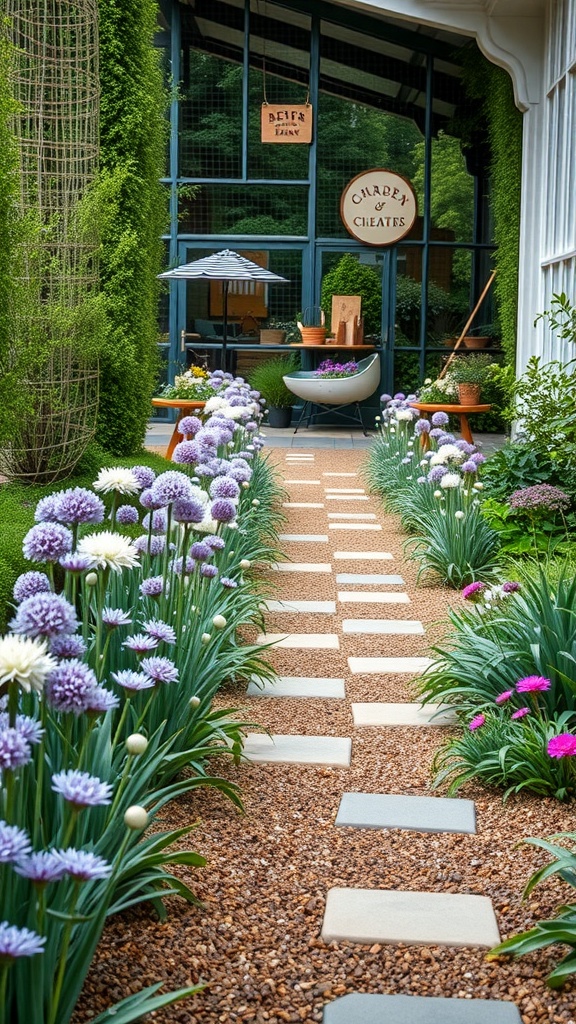
Alliums bring a unique charm to garden pathways. Their round, colorful blooms create a stunning visual effect, guiding the eye along the path. In this image, you can see a lovely arrangement of alliums flanking a stone pathway, making the journey through the garden feel special.
The soft hues of purple and white alliums contrast beautifully with the earthy tones of the gravel. This combination not only adds color but also texture, enhancing the overall look of the garden. The pathway itself, lined with smooth stones, invites visitors to stroll and enjoy the scenery.
As you walk down this path, the alliums sway gently in the breeze, adding a sense of movement. They are perfect for creating a welcoming atmosphere, whether in a small backyard or a larger garden. Incorporating alliums along pathways can turn any ordinary walk into a delightful experience.
Striking Allium Varieties for Your Garden
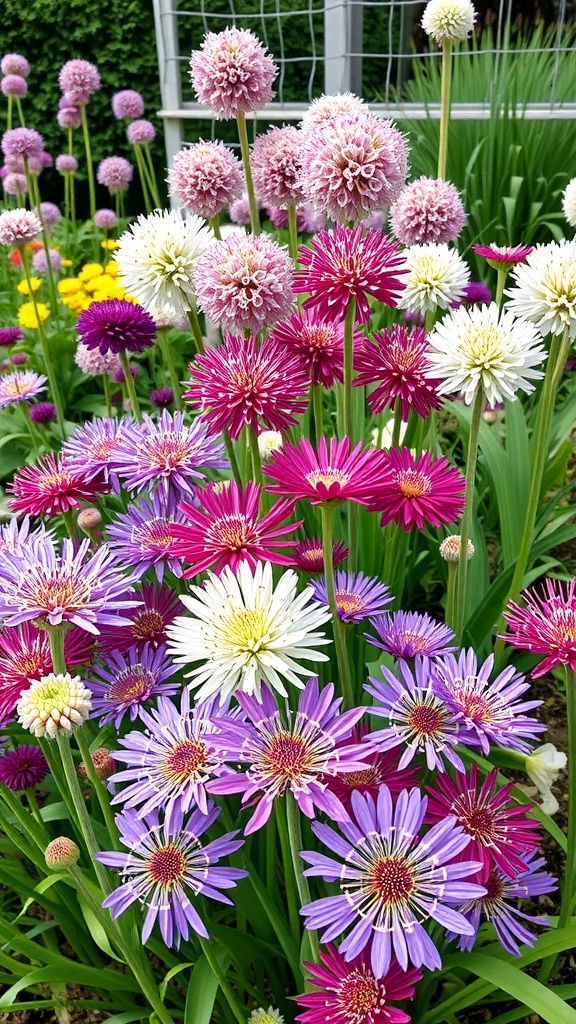
Alliums are a fantastic choice for any garden, bringing a unique flair with their bold shapes and vibrant colors. The image showcases a stunning variety of alliums, featuring round, fluffy blooms in shades of purple, pink, and white. These flowers stand tall and proud, creating a lively atmosphere.
Among the alliums, you can spot some with a pom-pom appearance, which adds a playful touch. The mix of colors, including deep purples and bright whites, makes for a striking visual display. Pairing these with other flowers can enhance their beauty, creating a colorful tapestry in your garden.
Alliums are not just pretty; they are also low-maintenance. They thrive in well-drained soil and prefer full sun. Once established, they can return year after year, making them a reliable choice for gardeners. Whether you plant them in clusters or as standalone features, they are sure to catch the eye.
Alliums and Seasonal Festivals
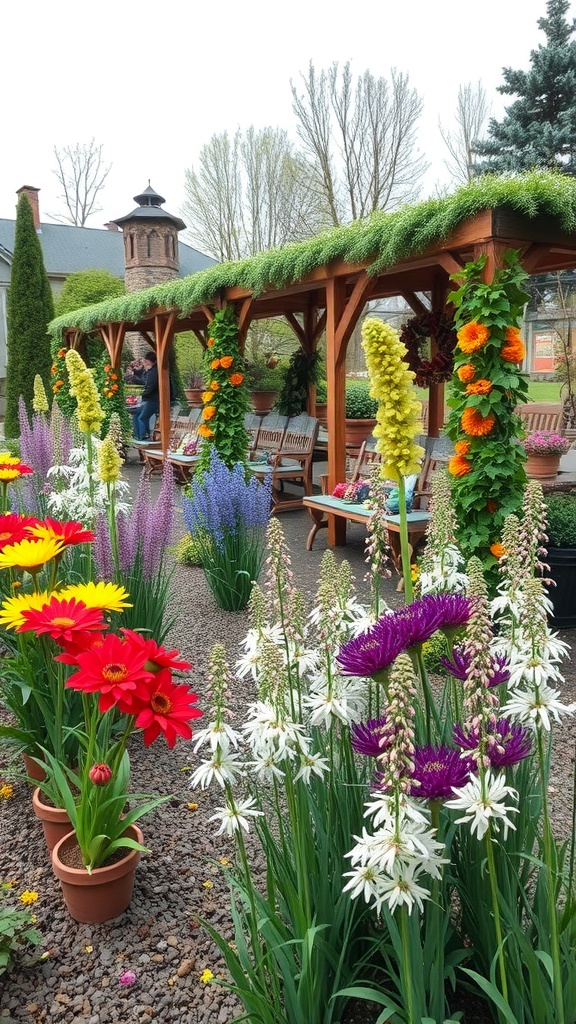
Alliums bring a burst of color and joy to gardens, especially during seasonal festivals. In the image, you can see a vibrant display of alliums alongside other flowers, creating a lively scene. The mix of colors, from bright reds and yellows to deep purples, makes the garden feel festive and inviting.
Seasonal festivals often highlight the beauty of flowers like alliums. These events celebrate nature’s beauty and bring communities together. People enjoy walking through gardens, taking in the sights and scents, and sometimes participating in activities like flower arranging or gardening workshops.
In many places, festivals feature local vendors selling plants, crafts, and delicious food. Visitors can learn more about gardening techniques and even pick up some allium bulbs to plant at home. The joy of seeing these flowers in bloom is a highlight for many, marking the arrival of spring and summer.
Alliums for Fall Gardens

Alliums are a fantastic choice for fall gardens. Their unique spherical blooms add a playful touch to any landscape. In the image, you can see a cluster of alliums standing tall with their fluffy, pinkish flowers. They create a lovely contrast against the lush green foliage surrounding them.
These flowers not only look great, but they are also hardy and easy to care for. Planting alliums in the fall allows them to establish roots before winter. When spring arrives, they burst into bloom, bringing life to your garden after the cold months.
Incorporating alliums into your garden design can enhance the visual appeal. They pair well with other fall favorites like asters and chrysanthemums. This combination creates a vibrant display that can brighten up any outdoor space.
So, if you’re thinking about adding some charm to your fall garden, consider alliums. Their unique shape and color will surely make your garden stand out!
Seasonal Care Tips for Allium Plants
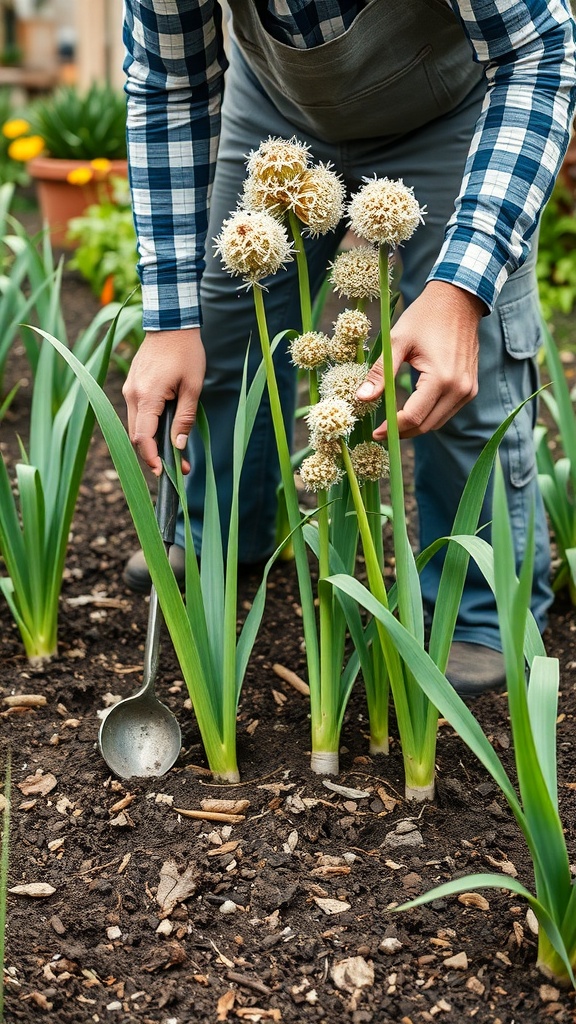
Alliums are stunning plants that can really brighten up your garden. They come in various shapes and sizes, making them a favorite among gardeners. In the image, we see someone tending to their alliums, showing the importance of care during the growing season.
To keep your alliums healthy, start by ensuring they have well-drained soil. These plants thrive when their roots are not sitting in water. Adding compost can improve soil quality and provide essential nutrients.
Watering is key, especially during dry spells. Make sure to water deeply but infrequently. This encourages the roots to grow deeper into the soil. Keep an eye on the leaves; if they start to yellow, it might be a sign of overwatering.
When it comes to fertilizing, a balanced fertilizer can do wonders. Apply it in early spring to give your alliums a good boost as they start to grow. Just be careful not to overdo it, as too much fertilizer can harm the plants.
Lastly, don’t forget about pests. Regularly check your plants for any signs of trouble. If you spot any pests, act quickly to prevent them from causing damage. With a little care, your alliums will thrive and add beauty to your garden.